

Have you ever seen Scott Pilgrim? It’s an action/romance/comedy movie about a guy who has to fight his girlfriend’s seven evil exes. It’s got great music, visual comedy, and dialogue—classic Edgar Wright.
The graphic novels are different. (Bear with me on this.) There’s still the main plot of fighting the evil exes, and it seems relatively similar, until the final volume—when his girlfriend leaves him, and Scott finds himself alone and depressed for four months.
He tries to get back together with three of his exes, only to realize that they remember their relationships with him very differently than he does.
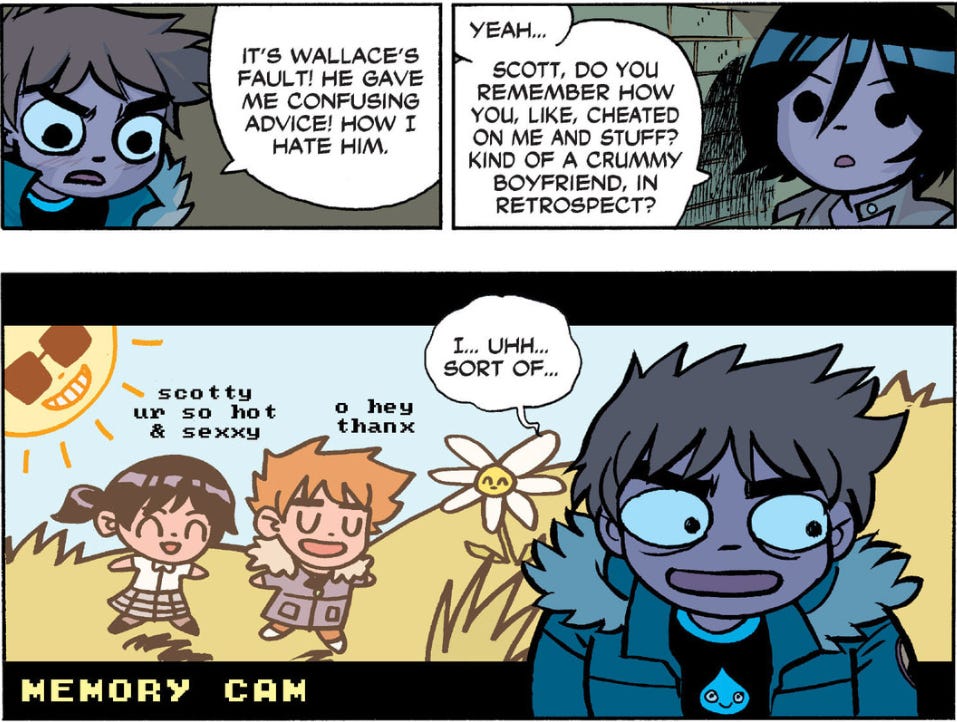
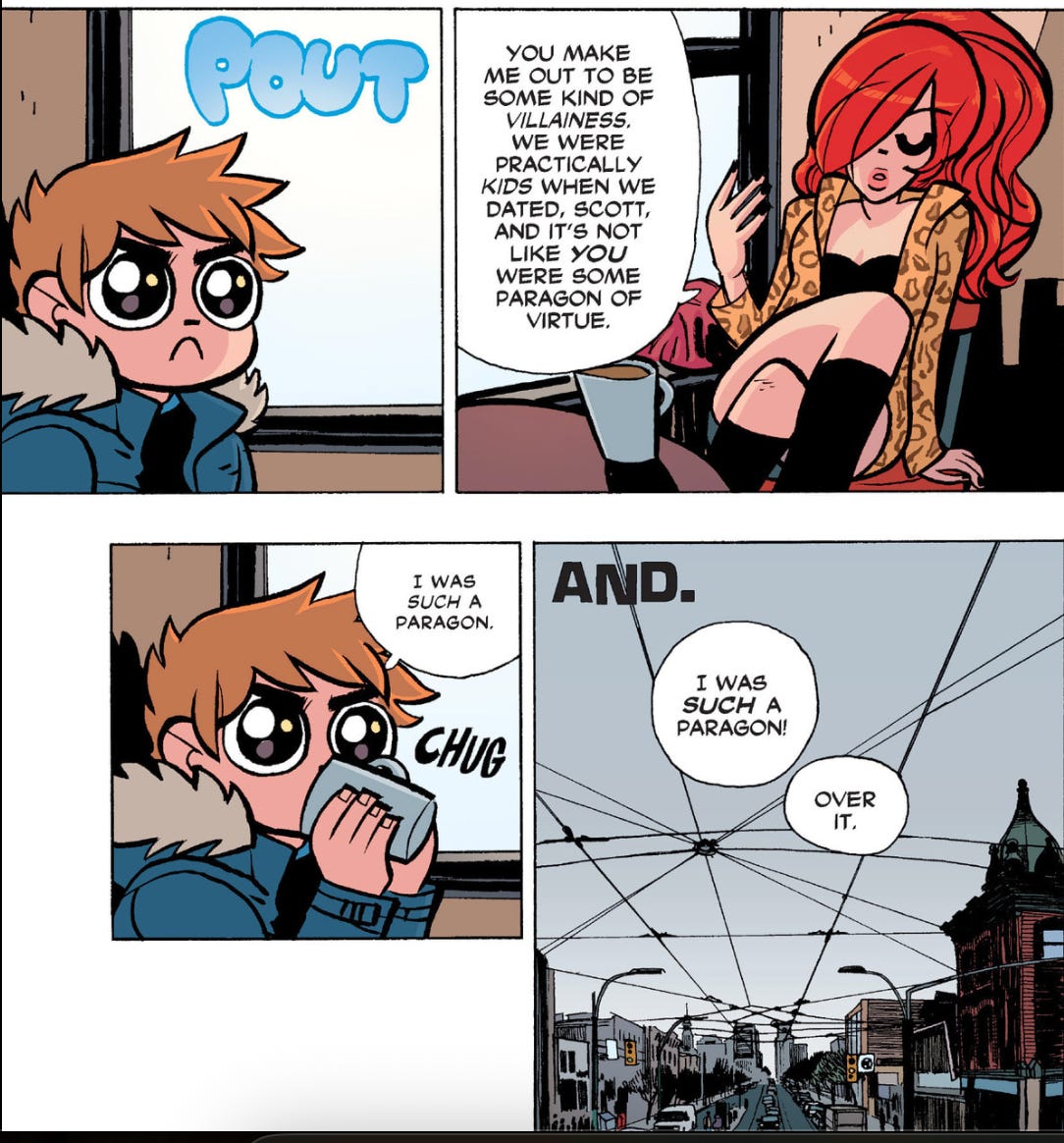
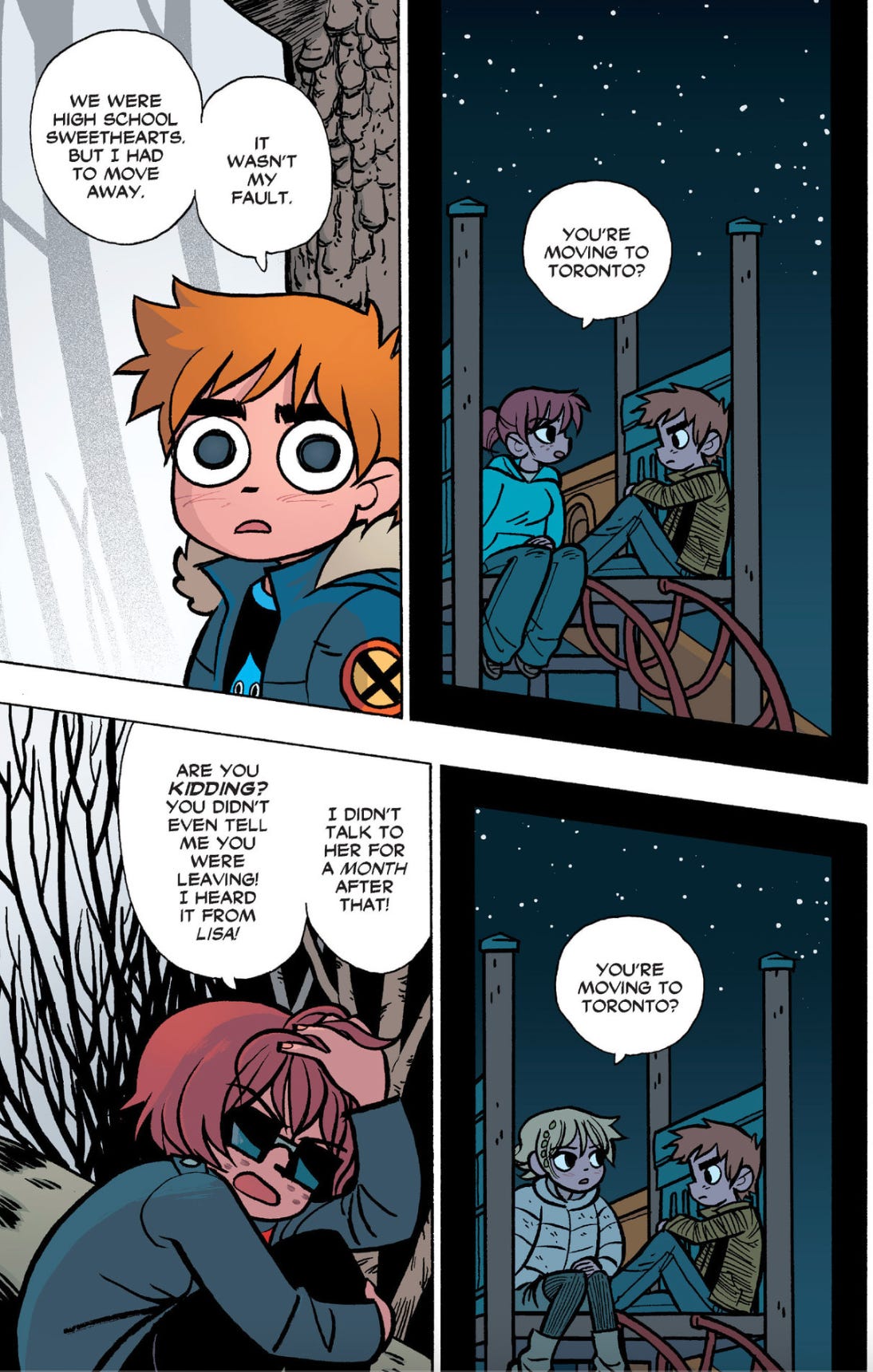
We (the audience) realize, before Scott does, that he has an extremely filtered view of his life. Turns out that Scott’s kind of an asshole! Despite his perception of himself as a Virtuous Protagonist, he’s a childish, insensitive mooch who’s barely tolerated by his friends. But, because it’s so load-bearing to his ego (and such a strong part of his model of reality—see SSC on predictive processing), he doesn’t let himself see any ~rejection or hurt from his friends, which prevents him from noticing or correcting his own flaws.
He eventually encounters the physical personification of his own mistakes (what Jung would call the shadow, Bryan Lee O’Malley calls Nega-Scott)—he tries and fails to suppress it, and his self-knowledge, before eventually recognizing him as Part Of Him, letting himself remember his own capacity for harm.1
Scott returns to face the villain (who is Just Like Scott but unintegrated) and with the power of Love and Understanding, triumphs over him.
In retrospect, it’s all pretty on-the-nose. But it landed quite sharply for me, when I first read it—largely because I was going through the same thing at the time. 2
just like me fr
When I was 17, I blew up my own life due to my own recklessness and stupidity, and spent six months depressed afterwards, with nothing to think about other than how I could have avoided it.
In retrospect, I think that was necessary for change. Spending months looking at the ruins of your life with a shattered ego, with the knowledge that this is only because you were an arrogant asshole, is extremely effective at shocking you out of delusion—at least, as long as you don’t fall into the trap of blaming it completely on other people. (Because The World Is Messy, there will always be ways to blame it on everyone else. That stops you from growing.)
I keep trying to think of what I could go back and say to myself, in order to avert All Of That, and I’m not sure what would have worked. Sure, I could have avoided my specific mistakes if I had a better understanding of the dynamics involved, but the meta-level understanding of grace and subtlety and arrogance could only have come from serious failure.
This isn’t just a hypothetical! It was extremely obvious to many of those around me at the time that 16-year-old Sammy was a hubristic, arrogant asshole, but they looked at me and were like “yeah I don’t know what to do to fix that”.
It is really hard to understand on a deep level that you are capable of causing immense harm, without having actually done that and sat with the consequences.
I wouldn’t exactly recommend hurting others followed by severe loneliness, self-hatred, and depression to someone, but I don’t know how to provoke change without that. (idk, maybe psychedelics?)
I’ve spent a lot of time talking about this with Anna Mattinger—you should check out her series on this in the context of sex and consent.
Two main takeaways, from her piece:
We cannot have good social judgement and understanding of ourselves and others without recognizing the capacity for harm and evil in all of us. “The battleline between good and evil runs through the heart of every man”.
When you divide society into “good people” and “people who hurt people”, you make it easy to defend harmful-but-sympathetic individuals, and risk coming down extra hard on minor mistakes from those who lack defenders.
I don’t think this essay will be helpful for sparking the kind of important change I’m talking about—words don’t have anything close to the same effect as Actual Consequences.3
But maybe it’ll be of use to someone Going Through It, in the same way the Scott Pilgrim graphic novels were useful for me.
If that’s you—good luck out there. It’s an ongoing process for the rest of your life, and you’ll err again and again while you try to get it right. But the other options are worse.
The relevant page:
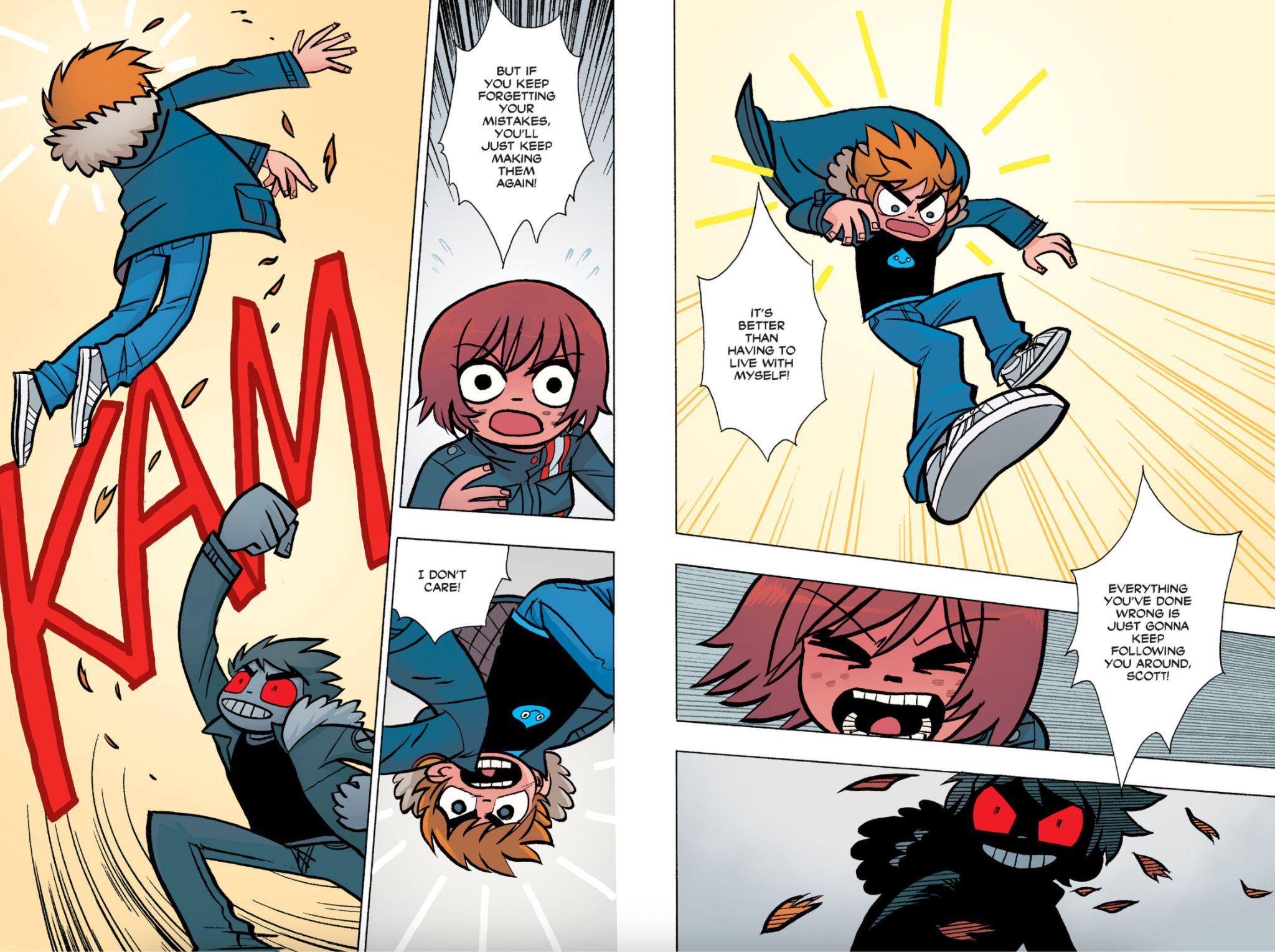
Depictions of the protagonist being an asshole out of motivated lack of awareness, and realizing the hurt they cause others, is relatively rare in media I’ve found. Unfortunately.
People use this kind of language while doing exactly the kind of things the language is describing and warning against.