
Building a podcast studio at Lighthaven
For fun, profit, and public goods

Last year, Rachel Shu and I built a podcast studio at Lighthaven1. It was (mostly) a good time, despite it being my first time building a studio. I’d like to write up why I did this, what mistakes I made, and how to replicate it, in the hopes that someone else might build something similar. This was one of my favorite projects (of last year, and of all time), and I’m glad to finally write it up.
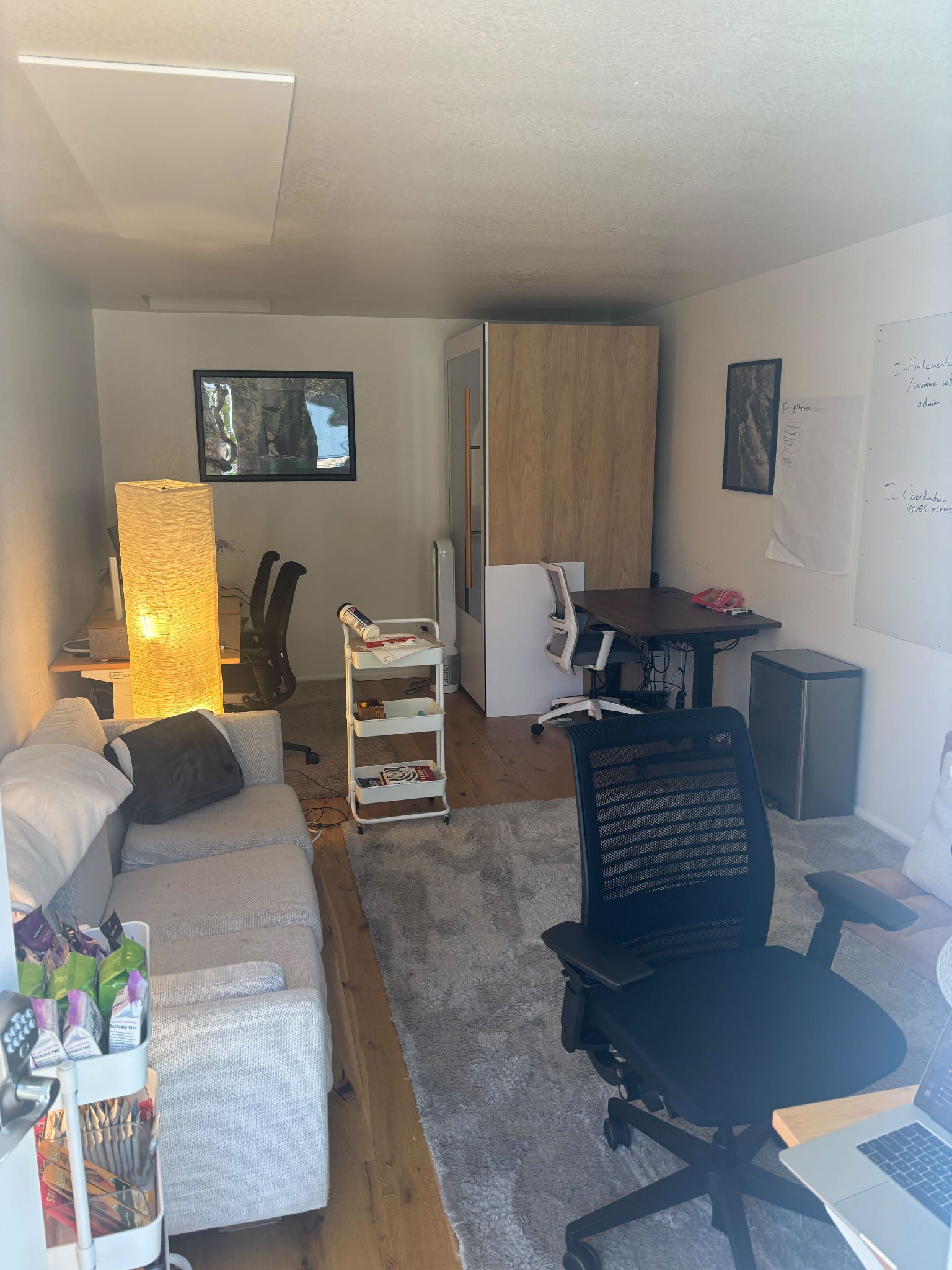
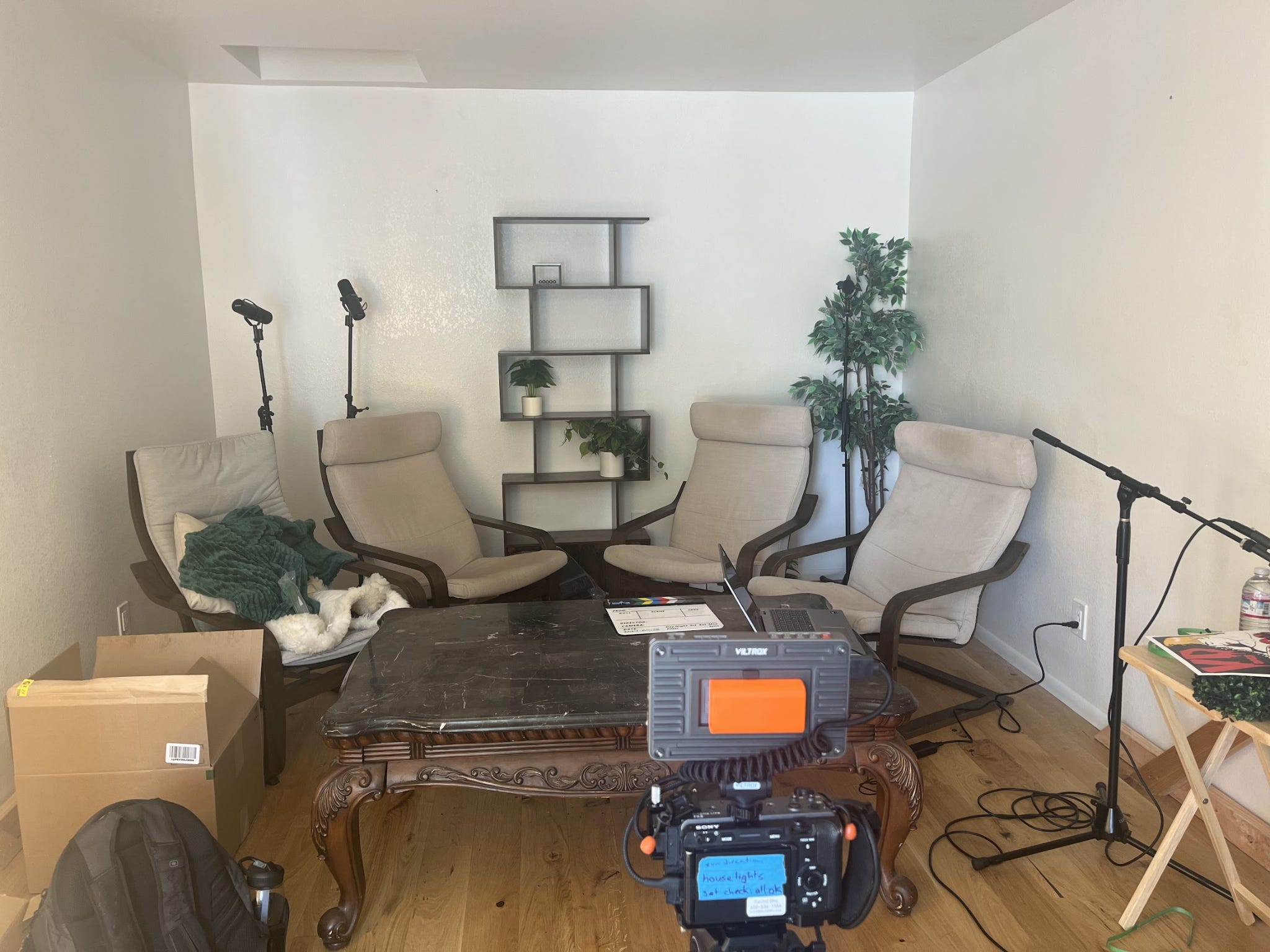
How it started:
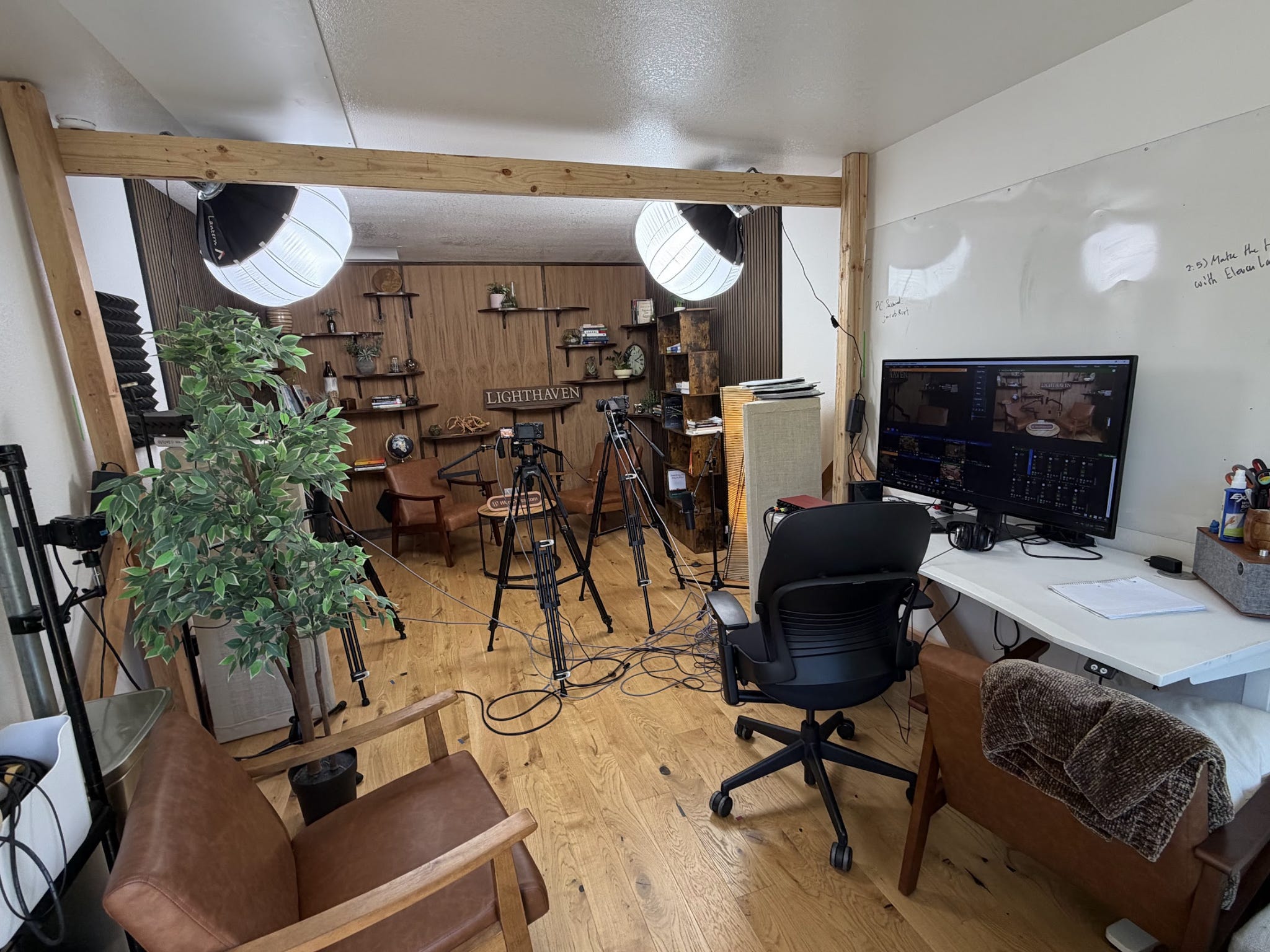
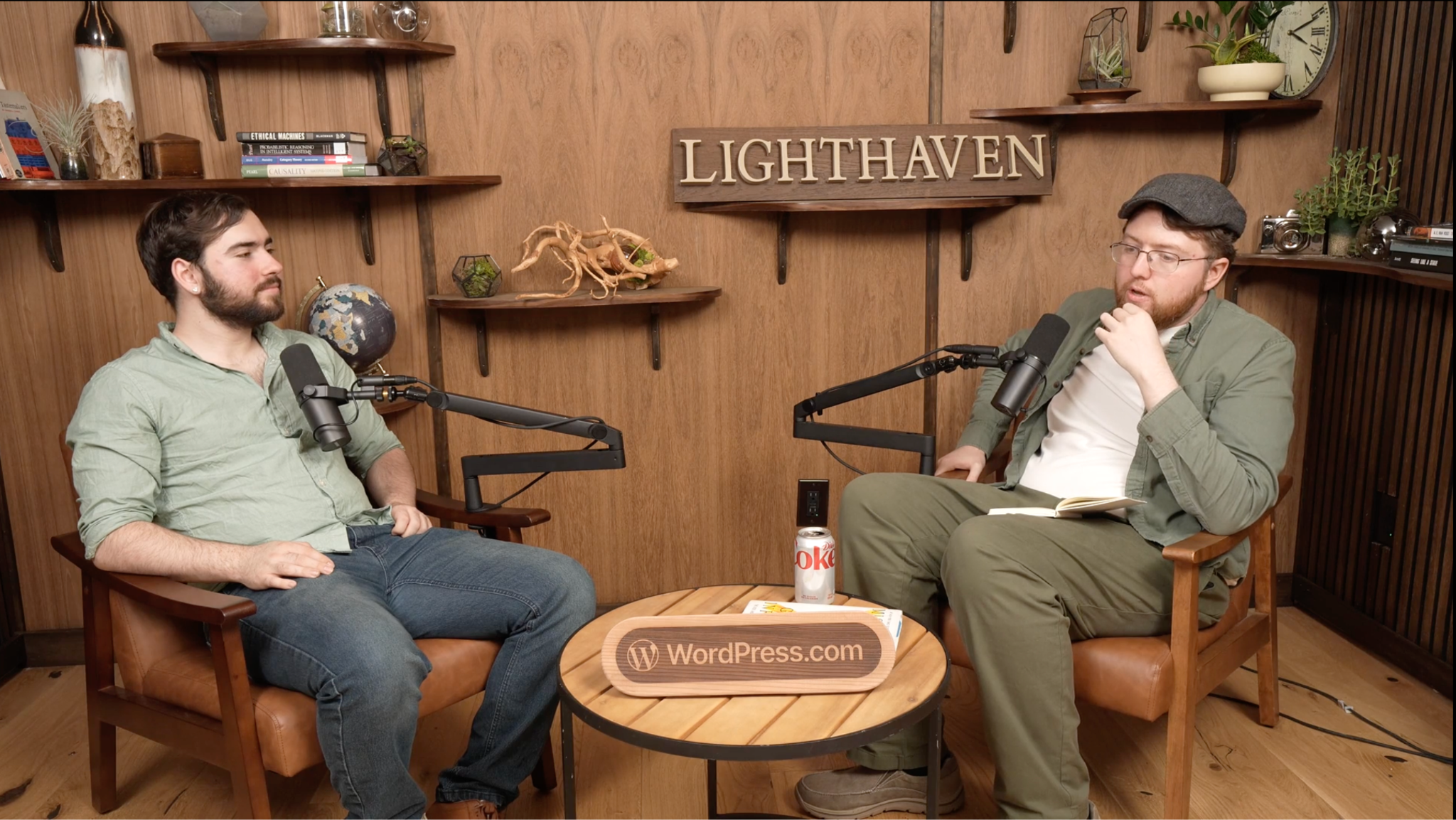
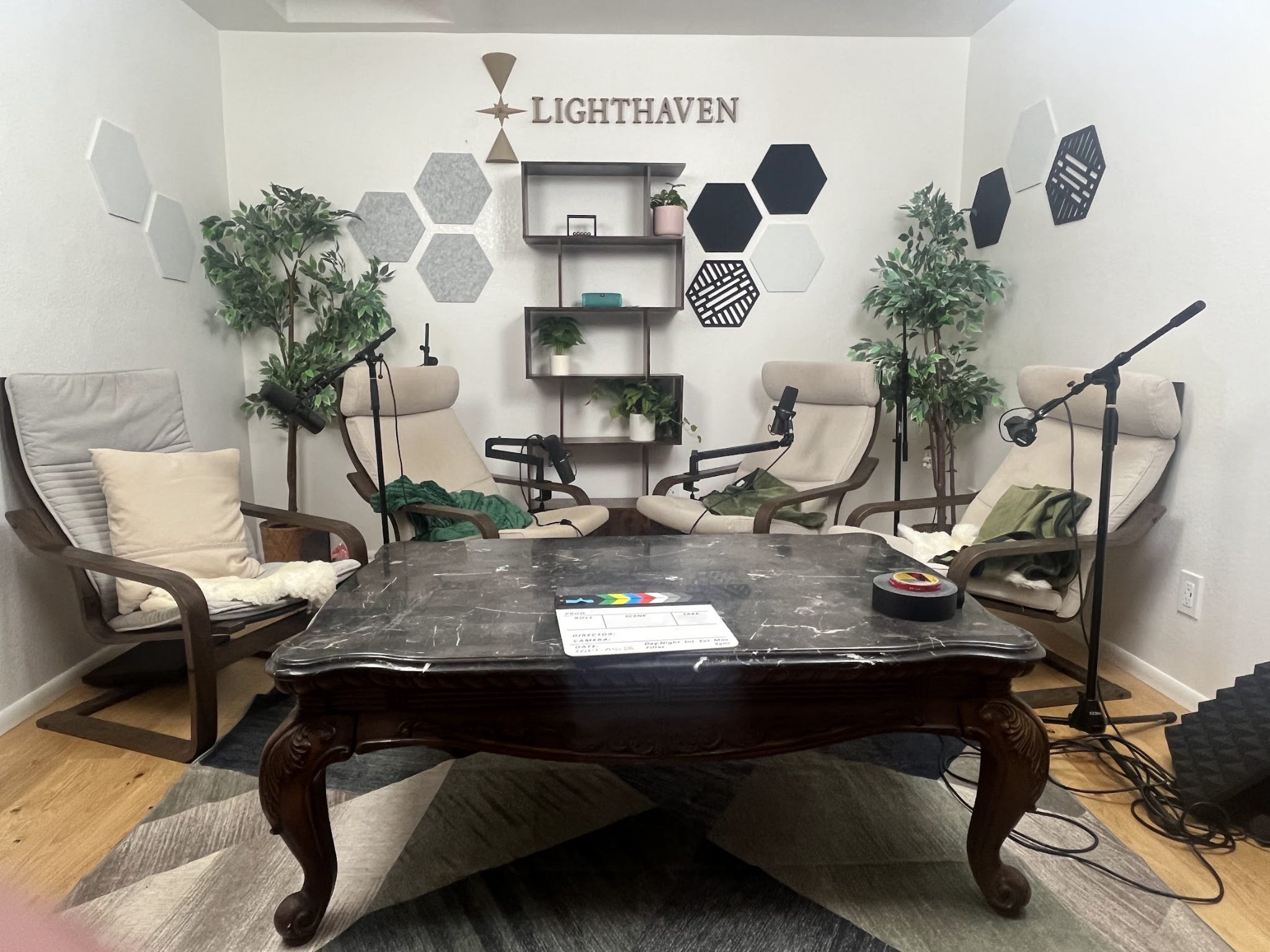
How it’s going:
Some Background
In 2024, Patrick McKenzie and I produced the first batch of Complex Systems episodes while at Lighthaven for Festival Season (an excellent collection of conferences every summer). The process looked like “find a guest we wanted to have on, ask them if they wanted to appear, make the Scheduling Tetris work, rent a studio through Peerspace (my beloved), get an Uber to the studio, set up our equipment, record the actual episode, tear down, get an Uber back to Lighthaven.”
This was pretty clunky, and a lot to ask of guests! In retrospect, there was a lot of room to improve—the ideal setup would’ve been something in-house at the venue where you could just sit down and start recording.
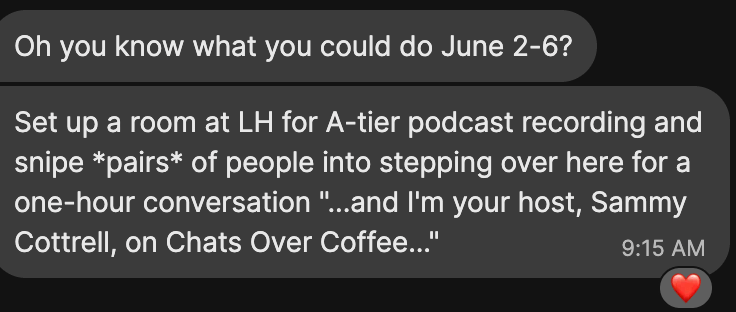
Then, in 2025, Ross Rheingans-Yoo (a client I had worked with closely on a video podcast series over the last year) made a suggestion for a branch I should run during the upcoming Arbor Summer Camp.
Anything Worth Doing Is Worth Overdoing
I took the idea and ran with it. I brought Rachel Shu (an excellent videographer who I had worked with before—she now runs Mox) to Lighthaven and began to scout out different possible sites for a video studio.
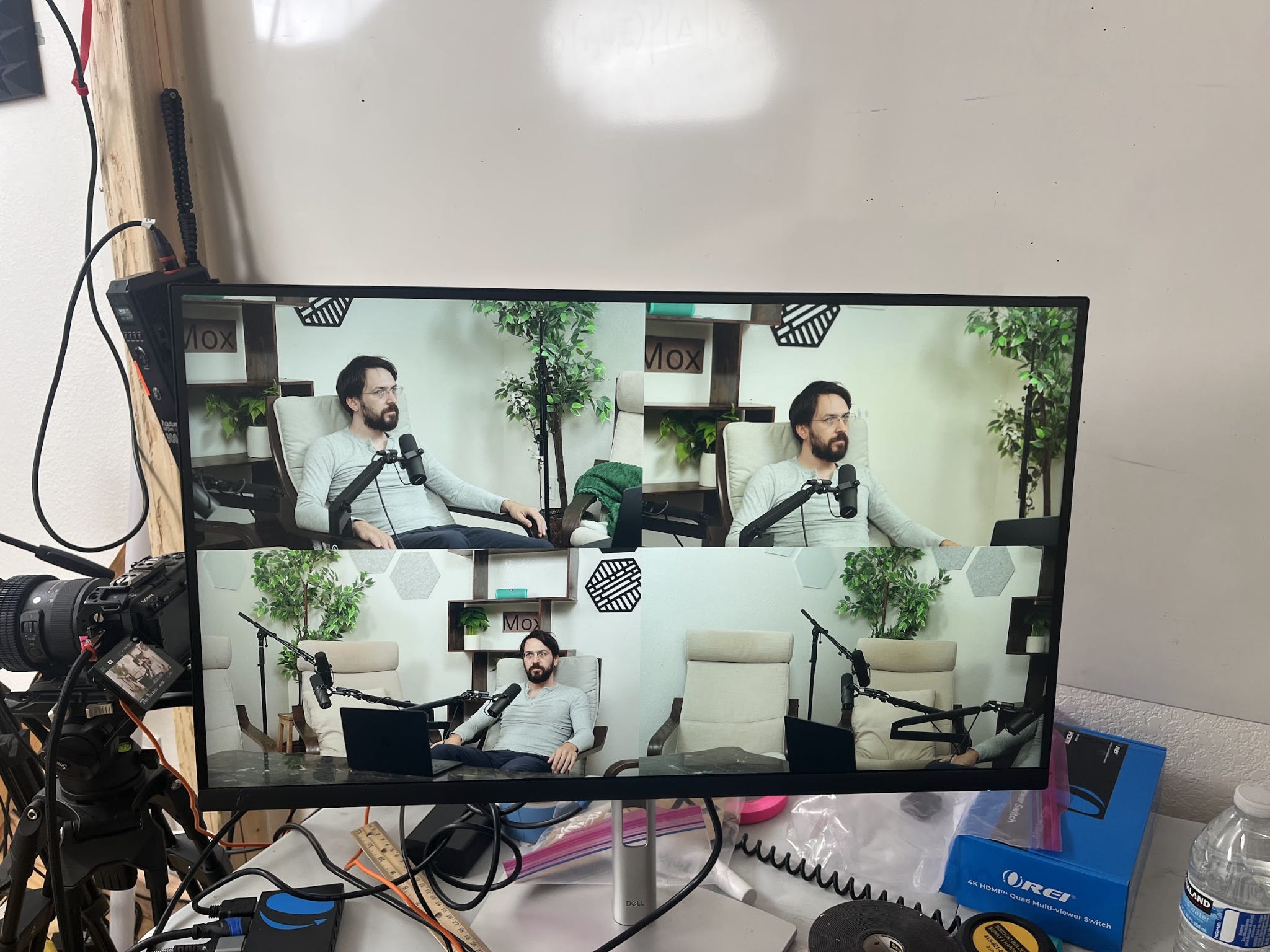
A note on audio vs video: If I wanted this project to be simple, easy, and cheap, I would have set up an audio-only studio. All it would take is some microphones, some soundproofing foam, and a mixer. Instead, I decided that this would be a good impetus to try recording some video episodes of Complex Systems, and so decided to go for a 5-camera studio that could support four guests at once.
Then, I wrote up a one-pager for why we should have this, and sent it over to the organizers of the three conferences I needed permission from—Rach and David for Manifest, Ross and Ricki for Arbor Summer Camp, and Ben Pace for LessOnline. I moved the one-pager to this footnote.2
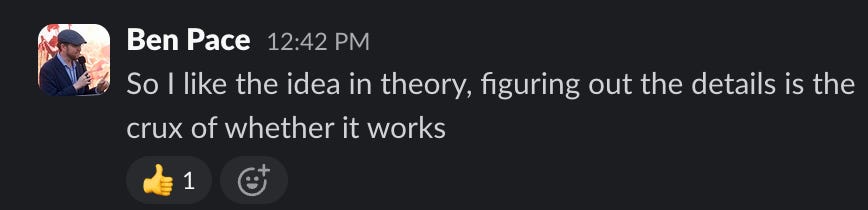
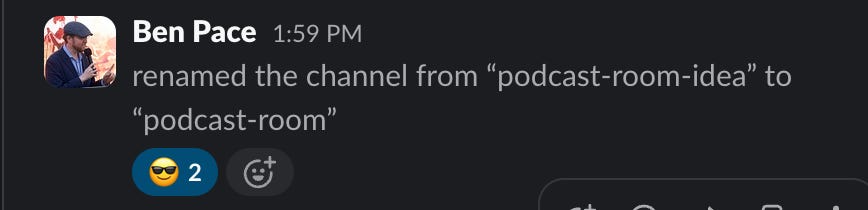
I was quickly thrown into a slack channel to discuss the room—this ended up being the main place for coordinating things throughout the conferences.
Unfortunately, it looked like taking over all of building F would be difficult—giving up a bathroom, a kitchen, and a full room to host a podcast studio was a pretty big ask.
Luckily, Ben Pace had another room in mind:
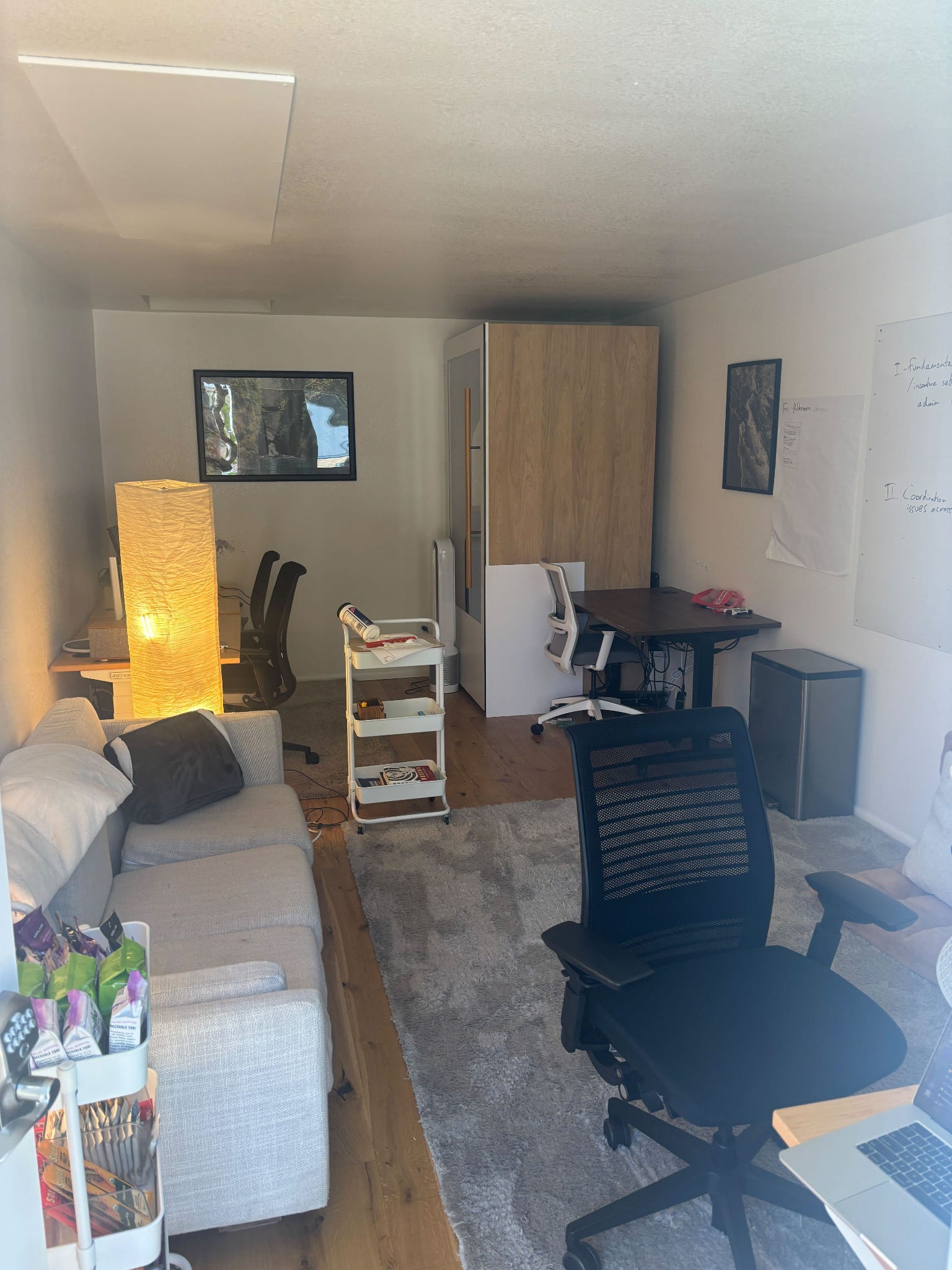
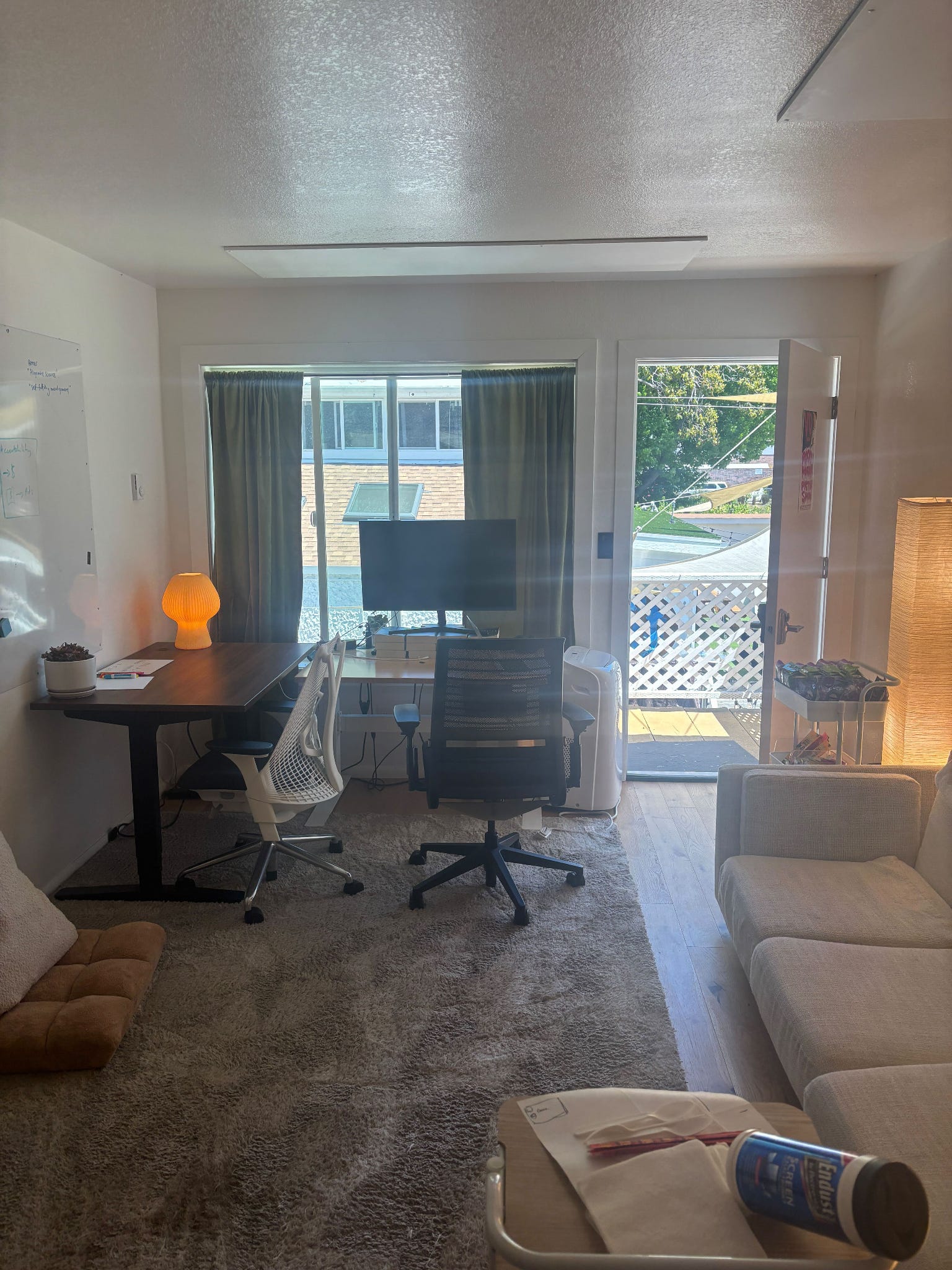
It didn’t look like much, but it turned out to be a great place to put a podcasting studio. 90 minutes after I sent the initial proposal, we had gotten the A-OK to set up the studio during Festival Season, in room 2D1.
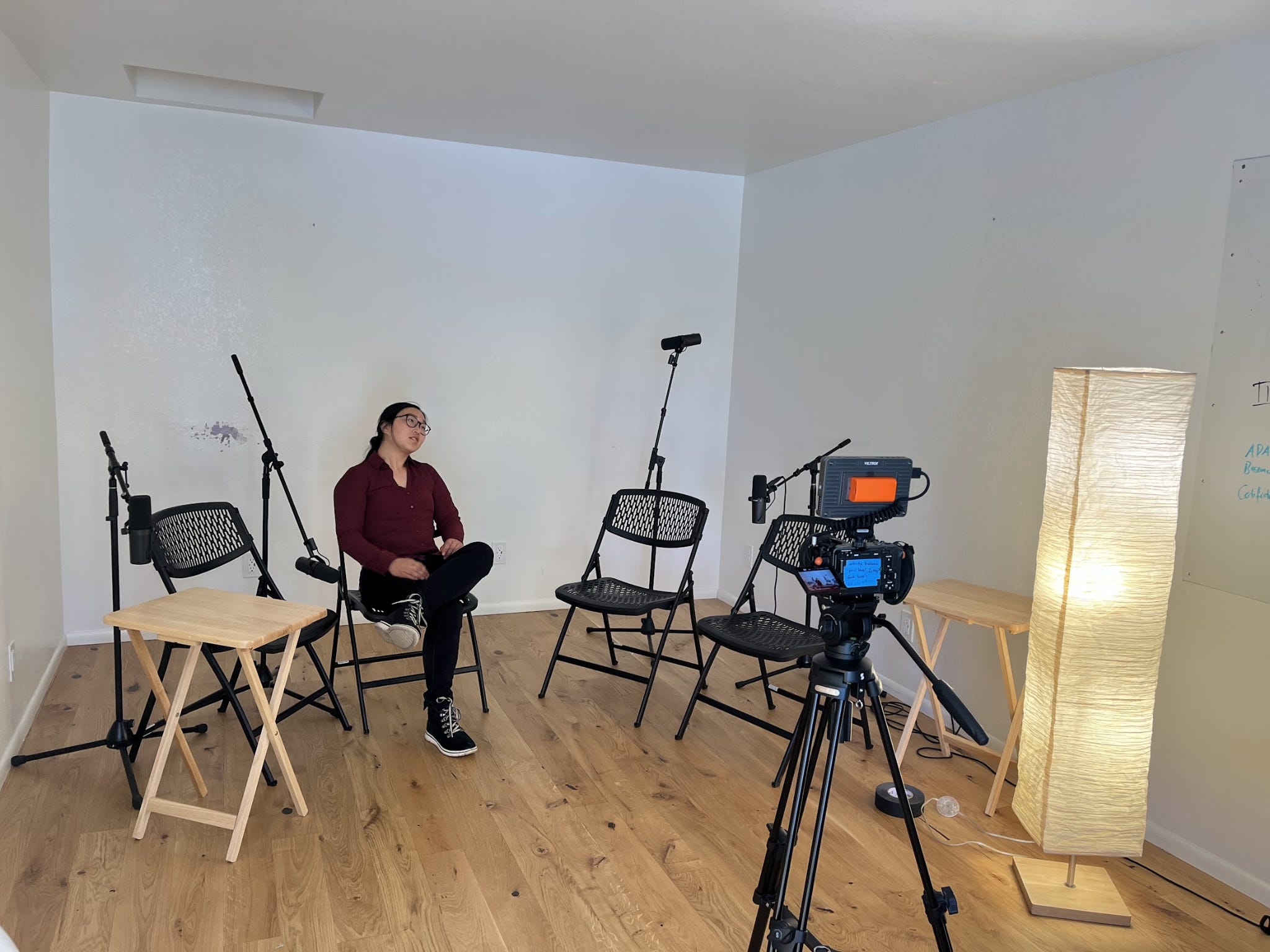
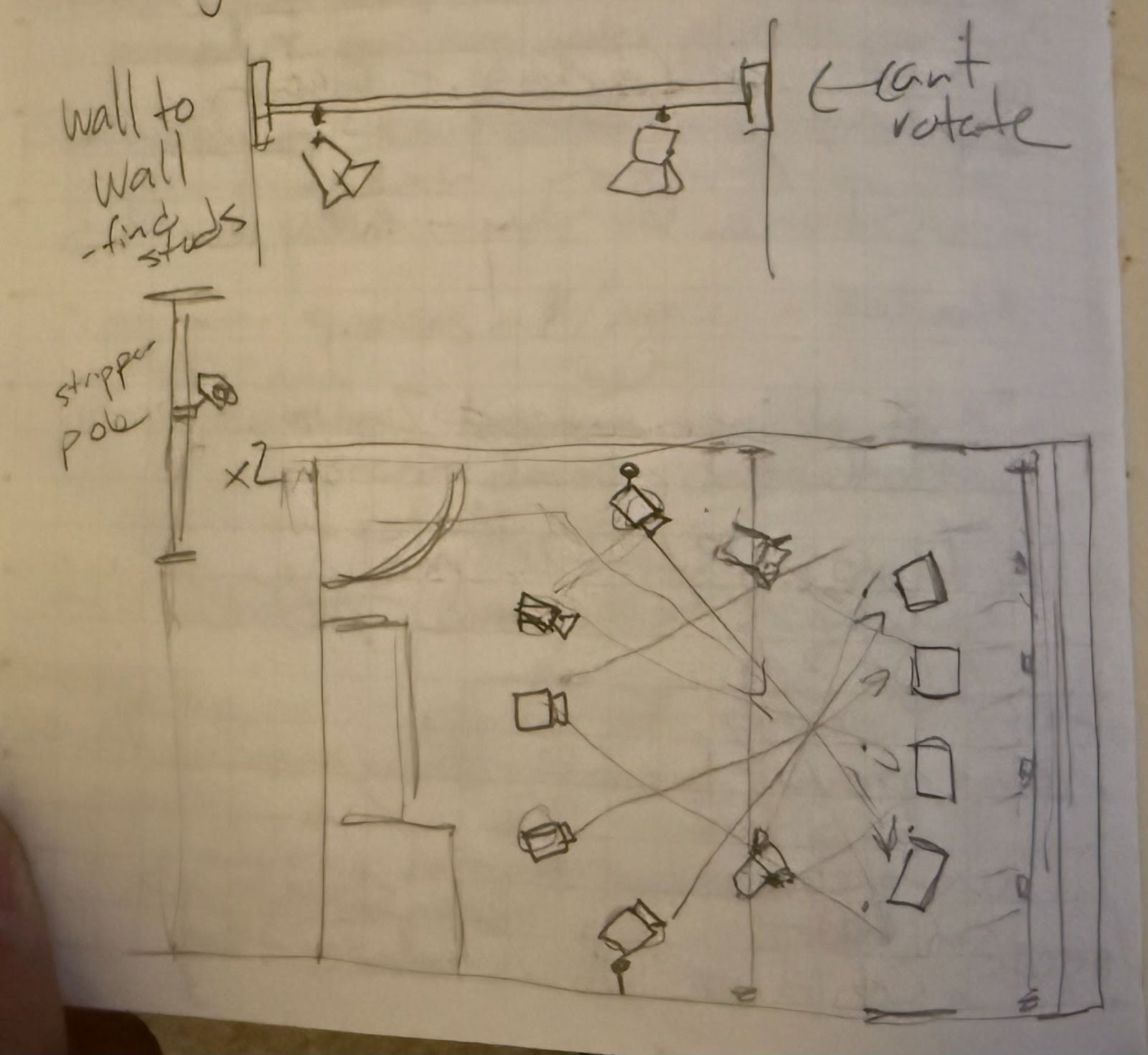
Rachel and I came to the room, blocked out what we’d need, and then looked at it with Ben for a bit. There was a lot to manage, including:
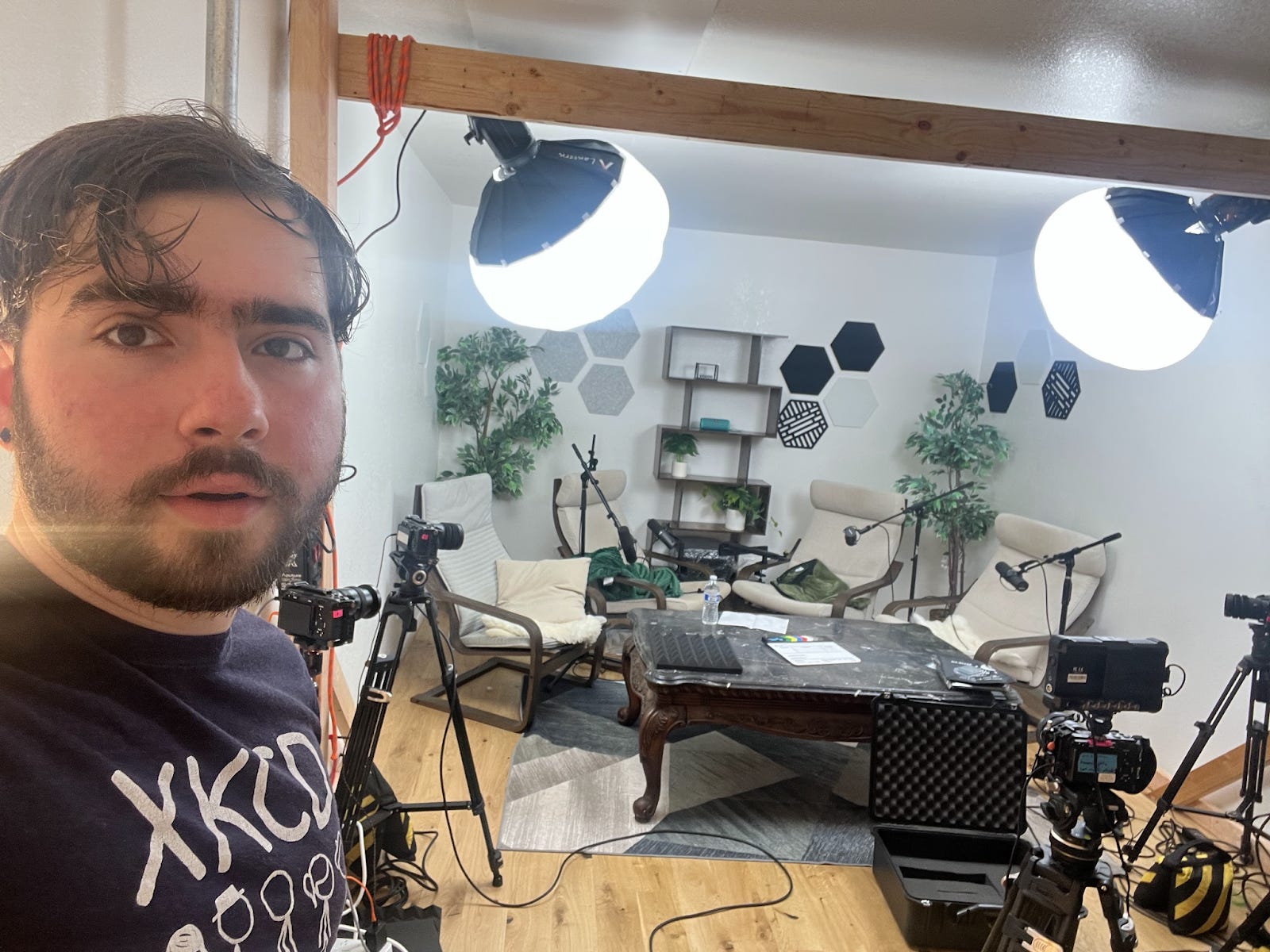
Lighting
We wanted to have control over the room’s lighting, so I set up a blackout curtain over the window.
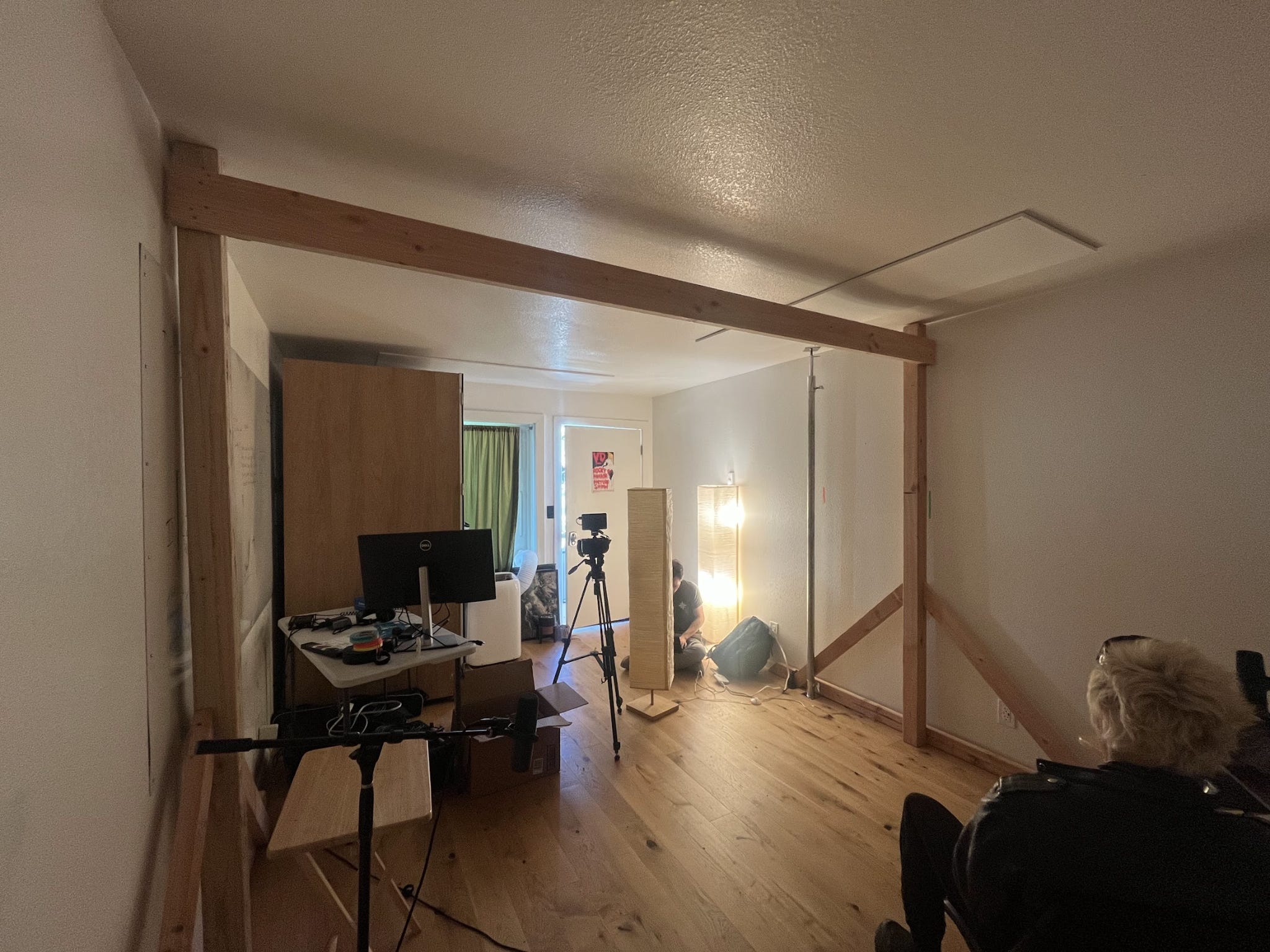
We then set up large rented lights—my understanding is that normally you’d set up some kind of stand for them, but we didn’t really have the floor space for that, so Lighthaven lent us Art (their in-house handyman) for half a day and he built us some scaffolding to mount the lighting to. The scaffolding and lighting are still there!
Decor
Believe it or not, but interior decoration is not my area of expertise. I (yet again) had help from Lighthaven here—I sat down with Alina, their in-house interior designer, and she helped me figure out how to populate the room with things that looked nice. I ended up borrowing plants and other items from various parts of Lighthaven. The teal speaker in the back of the room is just something I happened to have in my backpack, which I thought would be a good fit for the room.3
Furniture
The tables and chairs, like the plants, ended up just being things Lighthaven had lying around (by which I mean I stole them from their previous spots). They worked….fine, although the chairs were kinda bouncy in a way that was probably suboptimal. (When I saw that Nate Soares was taking his interview with Hank Green in the studio, after I got over my “holy shit my studio is on Hank Green’s channel”, my next thought was “oh god you can see Nate bouncing up and down with the chair oh god”)4
Cameras
We ended up using 3 Sony FX30s, one Sony FX3, and one of Rachel’s personal cameras. One wide, and one close-up for each guest.
A/C
The room didn’t have any HVAC setups. It was kind of a small room, and it got hot + high Co2 levels relatively quickly once the door was closed and people started talking. I was really hoping to figure out a way that the AC could run while the room was in operation, and tried to see if there was any way I could set up a unit on the roof and pipe the cold air in through a pre-existing opening on the ceiling, but that didn’t end up working out. We had the norm be “leave the A/C on whenever you aren’t recording” so that the room started out cold, which worked well enough for our purposes.
Pricing
The pricing, including the cost of renting things for 10 days:
Zoom H6 + stands + mics (rental) — $500
Sound consult (from the wonderful Seismic Sound) — $225
Lights & cameras, 10 days — $2,660
Laptop + accessories — $1,642.62
SD / microSD cards — $959.04
Hard drives — $811.48
Soundproofing foam — $133.76
Decor — $478.36
Total: ~$7,408
Plus maybe 2 days of labor from Rachel, a half day from both Art and Alina, and ~4 days of my time plus getting up to set up the equipment and staying around to shut it down every day for ten days. We were renting the audio and video equipment at about 50% discounts, due to the length for which we were renting it and Rachel’s good relationships with her suppliers.
It’d be about $1k less if I’d had a good spare laptop on hand, but I still needed my Macbook for actually working throughout Festival Season, so I just ordered a windows machine with a Thunderbolt 3 port for handling the uploads.
Patrick McKenzie ended up paying for the whole thing (because it’d be useful for filming Complex Systems episodes) and letting other folks use it for free as a public good. I’m quite optimistic about this kind of public good, and I’m glad it was worth it for him.
There’s an ongoing common theme of me not actually contributing very much, and just coordinating Good Things Happening with the resources of others—I just brought earnest chutzpah and project management to the table.
Our upload stack (aka The Machine Of Good Intentions):
Here’s the single worst decision I made during this whole project.
We had five cameras, each recording in 4K, across 10 days of conferences (eventually more when we negotiated with Reproductive Frontiers for it to stay up while they were there).
I bought ten 1TB SD cards, so that I’d have a set for the cameras to record to, while the other set would have 24 hours to upload the footage to my local hard drives. On Rachel’s suggestion, we used Backblaze for the ongoing cloud uploads—other setups like Google Drive didn’t handle the large, ongoing backups very well.
I don’t have a picture of the upload setup—imagine a laptop in a dark basement, plugged into two large external hard drives, connected physically to the router with Ethernet, with a dock set up to plug into 6 different SD cards at once. This bit worked pretty well!
Here’s the horrible idea. I decided that, because I didn’t want anyone to have to mess with the recording setup at all, I would just…leave the cameras on. People would sit down, do their podcast, text me the time of recording and what email address they wanted the podcast sent to, and then I’d take care of it on the backend. This…turned out to be a mistake. The “always running” bit worked fine! It avoided the extremely common problem of not realizing you’re not recording two hours into the podcast. But, if I wasn’t around during the shoot to tap “record” twice at the beginning and end to segment the recording, the backend editing work became a nightmare.
I was dealing with 30 TB of footage total, often in ~10-hour-blocks.
It’s not like you can just send everyone the whole day’s footage and let them edit their own part out! Lots of people have (extremely understandable) norms around privacy for things they record, and even if they didn’t—being sent a terabyte of high-quality video (5 feeds for 12 hours) is Kind Of A Lot for most people. This meant that I’d need to cut down the files in e.g. Premiere before sending. And, on the crappy laptop I got to do uploads, this would sometimes take 2 hours for every 1 hour of footage…per camera feed.5
So, I tried a lot of things to cut the files more quickly, though the physical read/write speed of the HDD ended up bottlenecking a lot. I also tried contracting it out to other folks, which ended up being…much messier than I expected. In some cases (where the video was separated out naturally because I was around for the recording), I walked people through installing and using the Backblaze CLI because their normal methods for install would time out after an hour.
It all eventually got solved, but it was a major source of brain damage for both myself and the people who made recordings. (Except people who did audio-only; that turned out to be quite simple). Thank you all for your patience in dealing with that.
Some Users
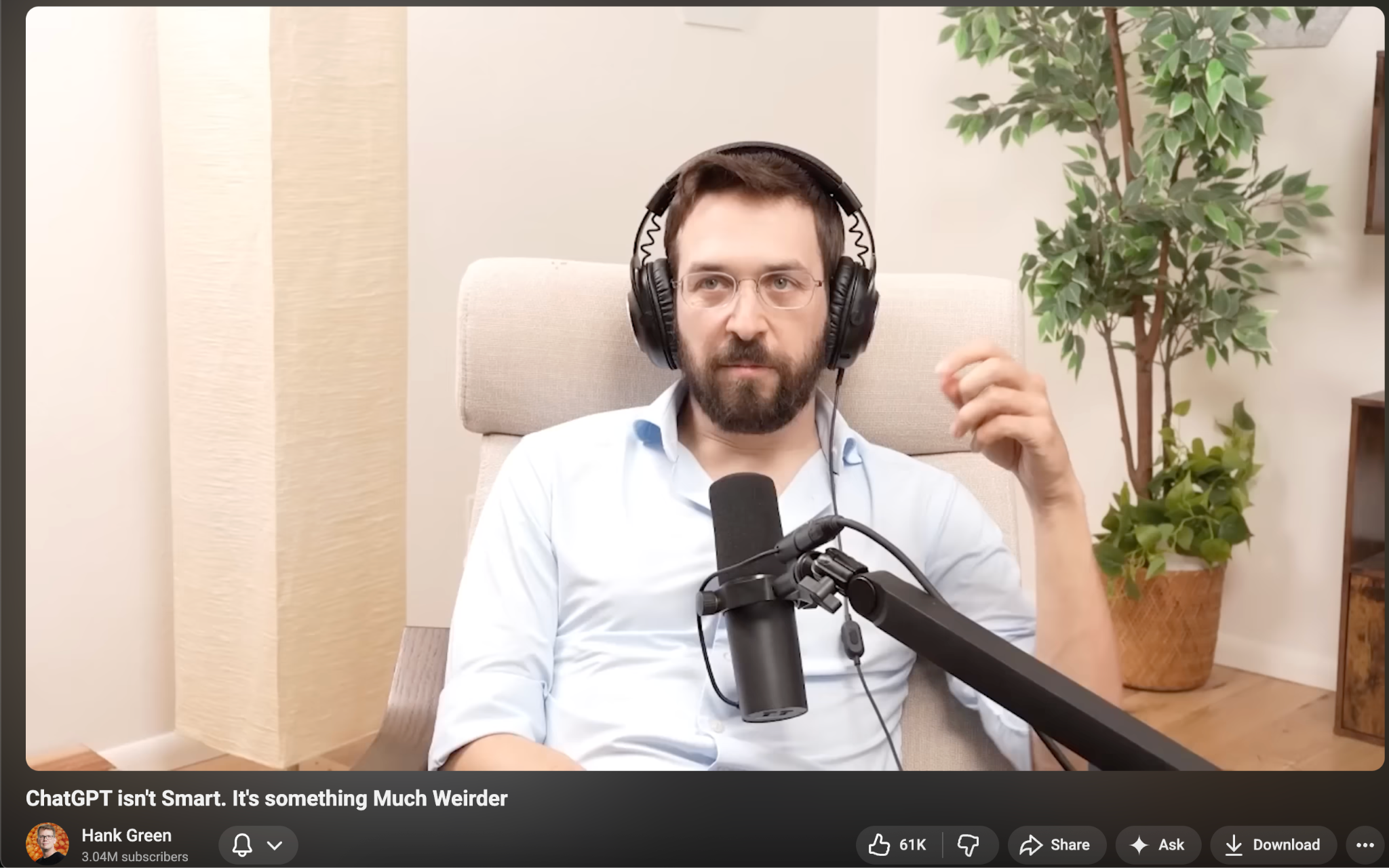
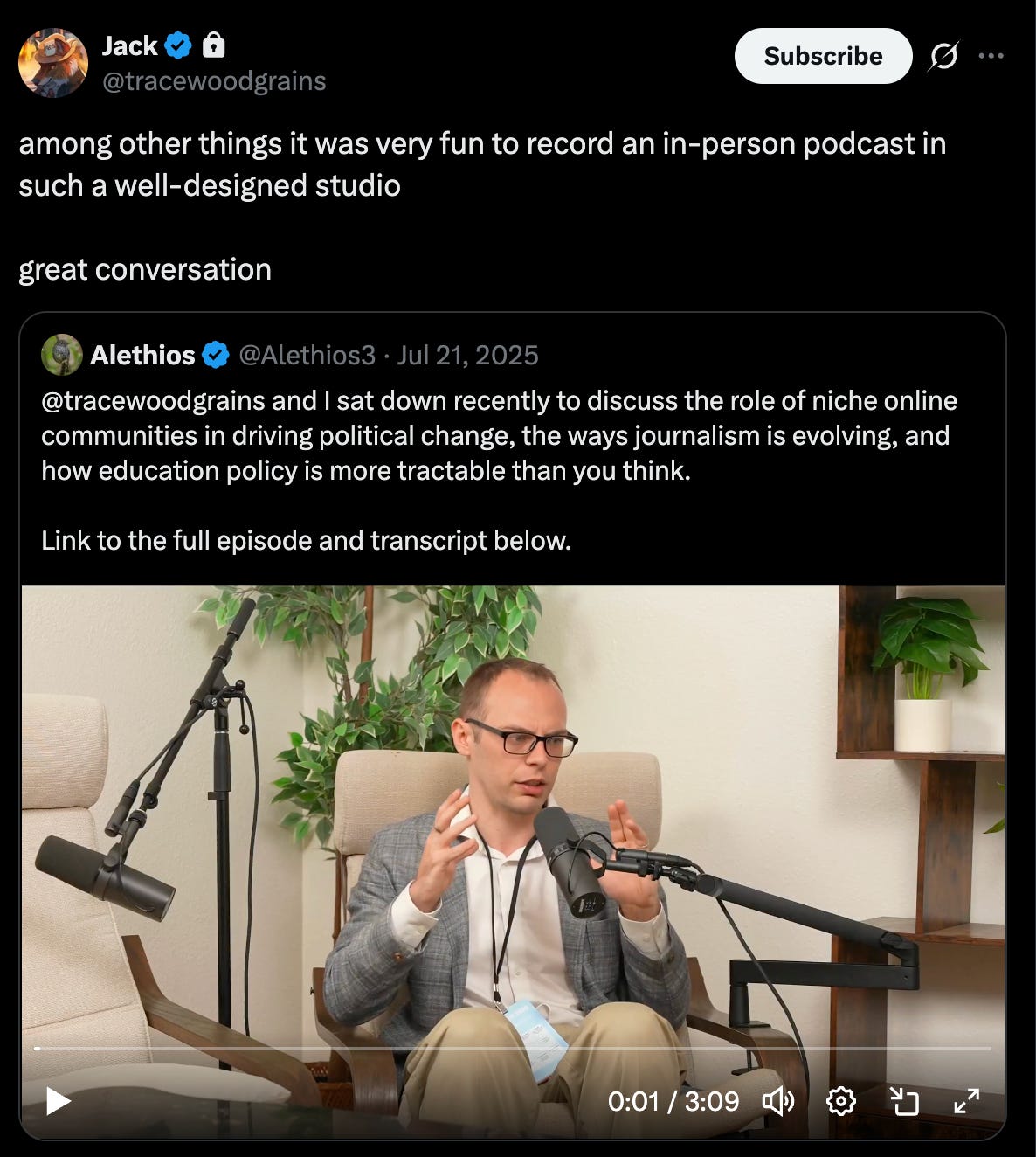
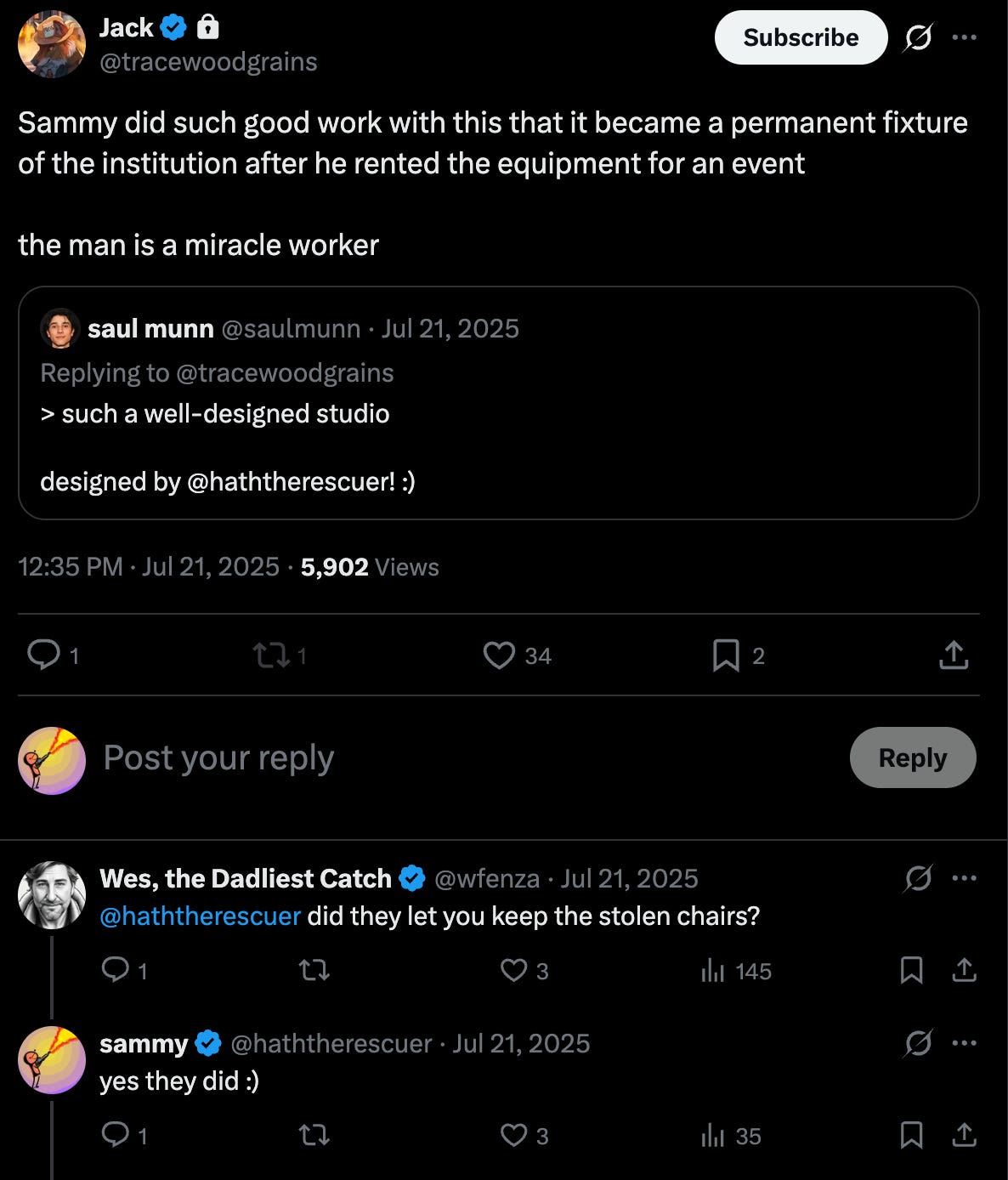
Most importantly—Patrick and I ended up recording a lot of incredible Complex Systems episodes. We had Emmett Shear, Cate Hall, Habyrka (who talked about becoming a human mold sniffer to make Lighthaven liveable), Ricki, and more.
Adam Jarvis and Parker Conley both started podcasts, the Sentinel folks recorded some episodes of their podcast, Razib Khan recorded some things, and Eneasz Brodski recorded some episodes of The Mind Killer and The Bayesian Conspiracy.
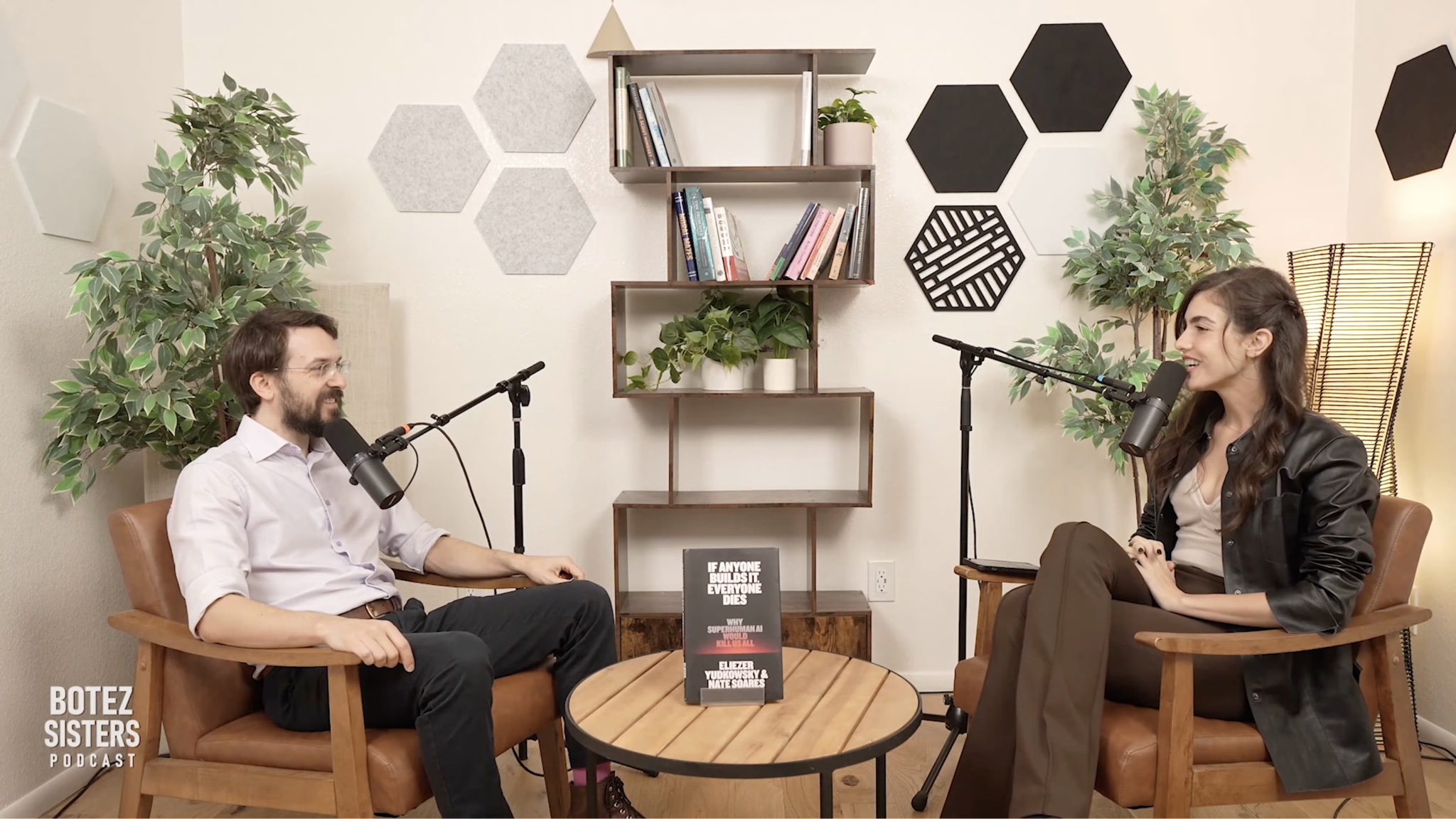
Later, after Lighthaven bought the studio, the Botez sisters recorded an episode here, and Aric Floyd used it a lot for his AI In Context series.
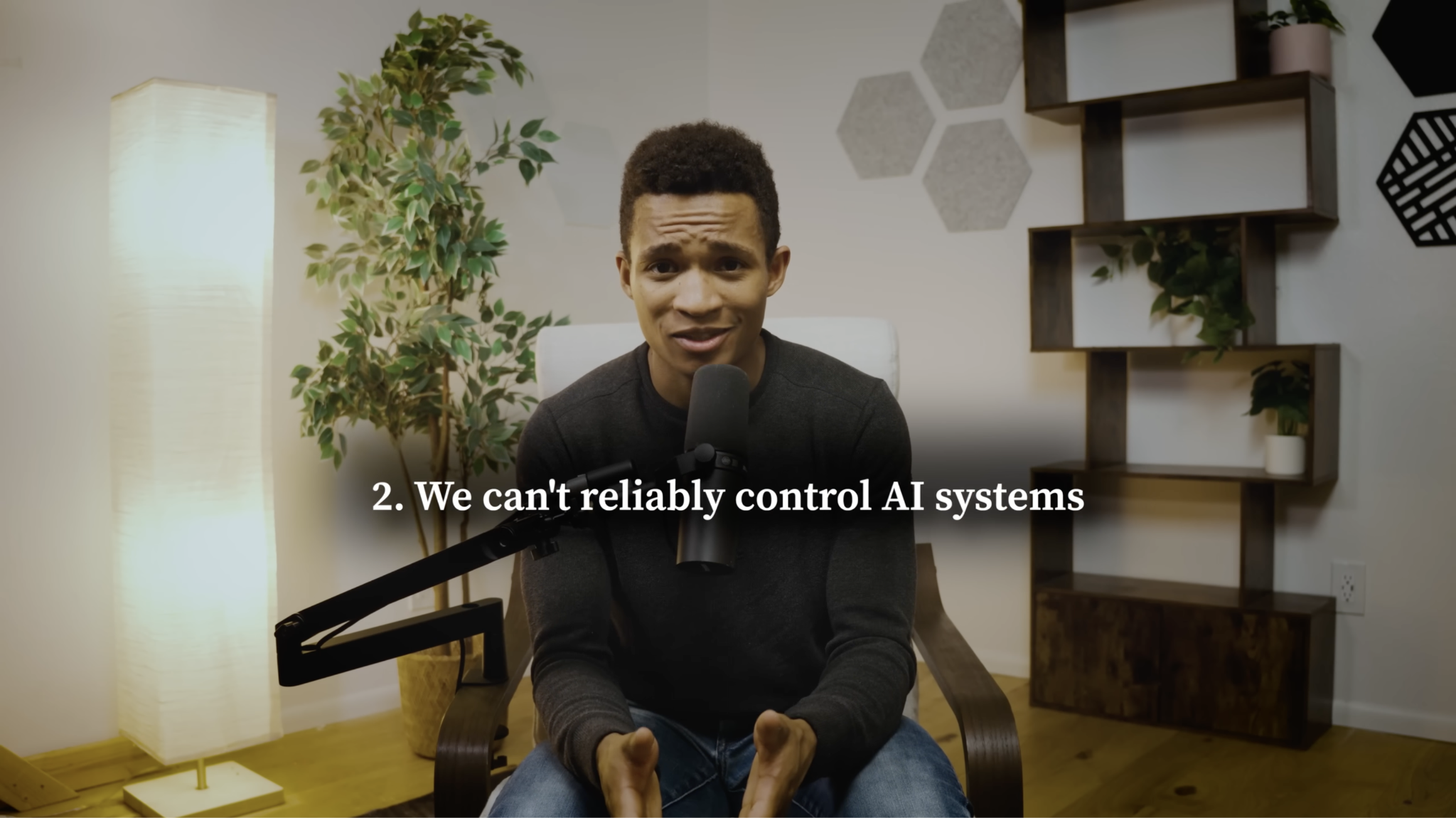
Adam Jarvis has an excellent retrospective on the podcast he started at Festival Season:
When I mentioned to my friends that I was planning a podcast with Trace, they became very excited, and explained they had some recording equipment available. I imagined we might set up a camera in their study. When I arrived in SF, I got in touch with Trace to organise logistics. He mentioned there was already a nice set up over at Lighthaven in Berkeley (the world’s greatest conference venue). He must have downplayed it though, because I was absolutely blown away to discover this:
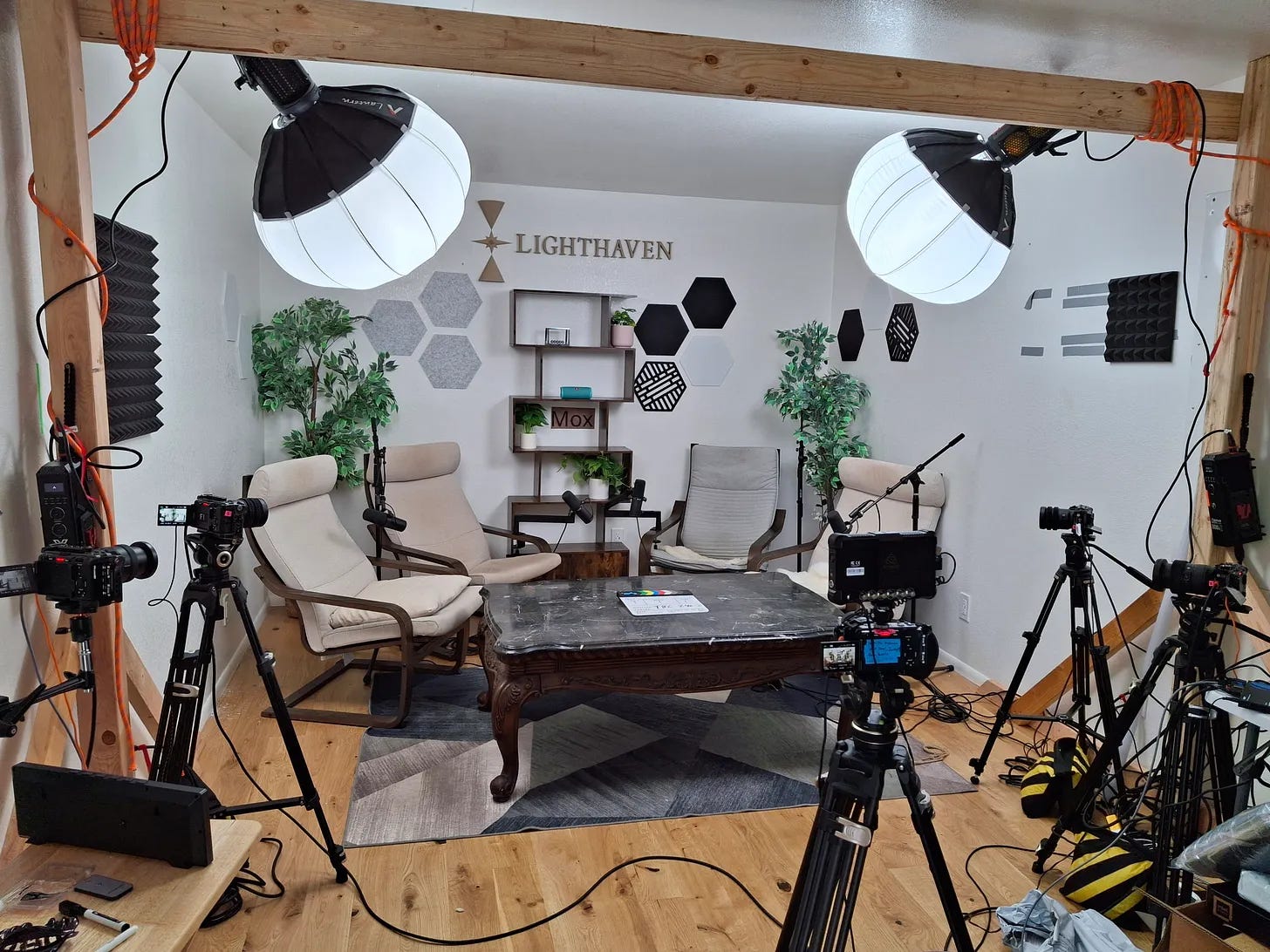
The previous year, Patrick McKenzie and his EA, Sammy, had arranged some complex logistics for recording his Complex Systems Podcast, hiring some AirBNB nearby and setting up a studio at the site. Transport to and from the recording venue ended up being a pain, and took away from time better spent at the conference. Setting up at the conference venue instead allowed Patrick to save money (for venue hire), and time. Meanwhile, everybody else got to use this absolutely wicked studio for free.
The equipment was initially set up to be running continuously all day. This made things very easy at the time—just show up, sit down, and start chatting—but contributed to some difficulties in post-production, as you’ll see. [note from Sammy: oops]
Incidentally, Lightcone ended up using the equipment in the podcast studio to film Liv Boree’s anti-debate between Dean Ball and Daniel Kokotajlo, which is hilarious to me for some reason.
Then What?
The Reproductive Frontiers Conference was running immediately after Festival Season—I ended up working with the organizers to extend the rental period on the equipment, so they could keep using the studio during their conference.
I talked to Lightcone about keeping it as a permanent installation, and to my surprise, they went for it! They ended up paying for permanent versions of the equipment, and for some of Rachel’s and my labor on swapping out the rented cameras for ones we bought. (I believe the total price for making it permanent was around $10-20k, plus the later additions they made).6
Then I spent a couple days stressing out about getting people their footage, spent some quality time with my then-girlfriend, and fucked off to Vibecamp to relax. (Highly recommend!)
I learned a couple weeks ago that Ben Pace had made significant improvements to the space, and that it’s now bookable for anyone to use! The old version looks quite ugly to me in retrospect, and I’m glad Ben put the effort into making it beautiful.
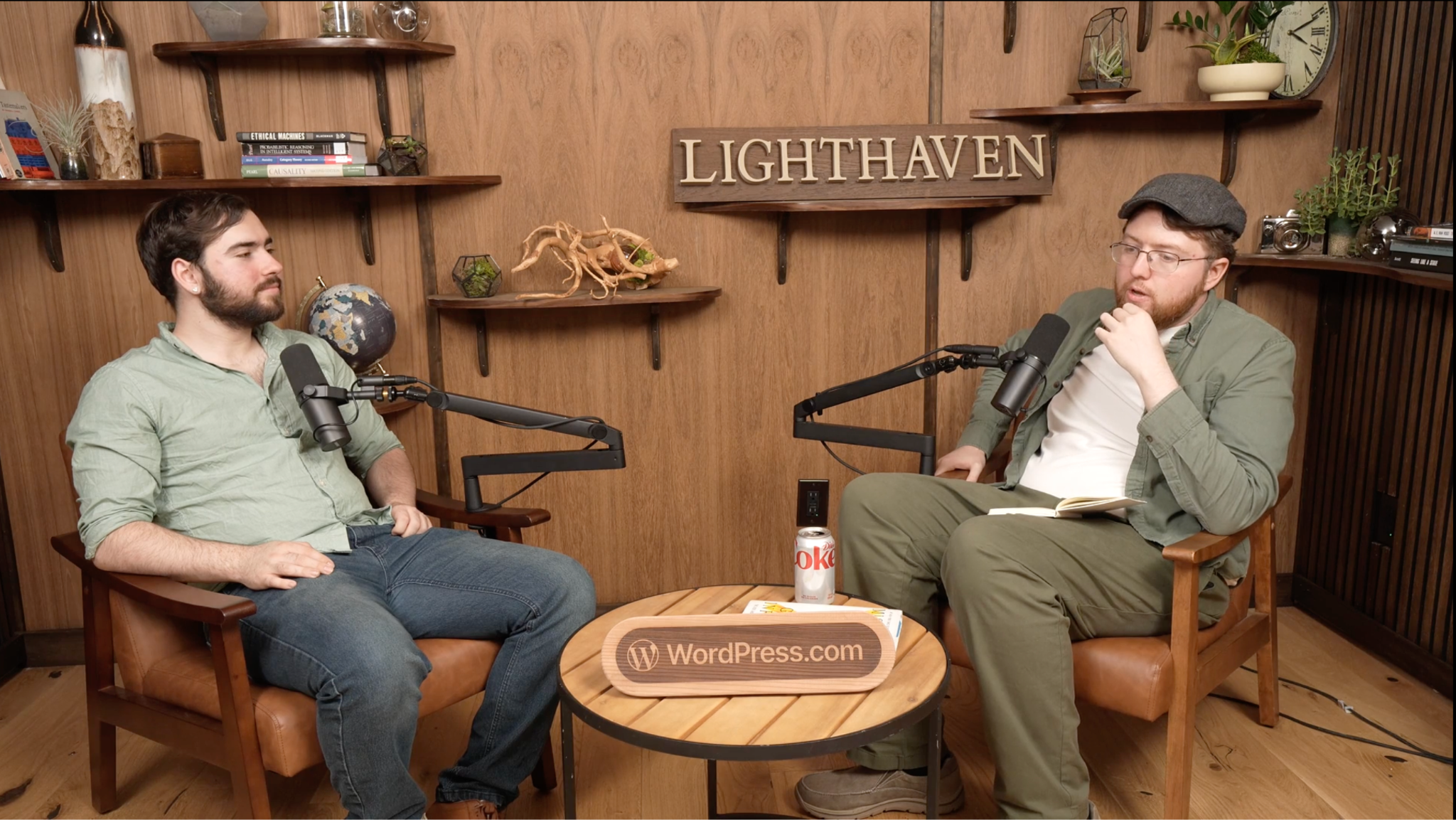
I’m quite happy about this outcome—I love Lighthaven, and I’m glad for more podcasts to exist! (See also my previous post on You Should Start A Podcast Even If You Hate Podcasts). There’s a sense of pride and joy that you get from being able to look at concrete improvements you’ve made to a space that you love.7
All in all, it was quite a fun and fulfilling project. The main lesson I’d take from this is “surrounding yourself with competent and friendly domain experts makes weird projects of all kinds easier”—pretty much all I brought to the table here was project management+pushing for the things I wanted to happen.8
If you’re interested in using the studio, it’s available to rent here! The first session’s free!
If you wish to commission high-effort public or private goods, you might wanna Hire Me.
And if you want to read more stories like this one, you might wanna subscribe!
for context, Lighthaven is a beautiful venue in Berkeley. It’s the greatest conference venue I’ve ever been to, and events there (Manifest in particular) are straightforwardly responsible for the career I have today
Here’s the message I sent out.
Hello Festival Season organizers,
I’ve been working on a lot of podcasts recently.
I think podcasts are the easiest+best type of public artifact that comes out of something like Festival Season--the first batch of patio11’s Complex Systems was recorded during 2024 festival season, and Ricki’s appearance (which wouldn’t have happened w/o the conferences!) was a great episode that also launched Arbor. They’re the lowest effort way to get good ideas on the internet.
Turns out that getting a bunch of smart interesting people in a room also creates a lot of good potential podcast episodes. I think a lot of attendees are interested in recording podcasts, but don’t because of logistics (setup is hard if you’re a novice), price (studios and mics are expensive, even in bulk!), or having a place to actually publish the podcast.
To solve this, I’d like to set up a dedicated room for the ten days of Festival Season to produce high-quality video podcasts (like this one), and assist people with producing/publishing their episodes afterwards.
I expect the recordings will be about 50% people who already have podcasts (Patrick, Razib, Ross, …, Dwarkesh, etc) and 50% people who don’t have podcasts yet but should. For the former, I’ll just send them their footage+audio. For the latter, I’ll offer to run their files through my editing+transcription pipeline at cost, or to help them launch their own podcast, or alternatively create a “Conversations At Festival Season” podcast and release the episodes through there.
The cost for renting cameras/lighting and buying noise reducing foam/etc will be around ~3.5k. I’m able to cover all this on my end (mostly through my existing clients, who otherwise would be spending upwards of ~3k on studio rentals alone), but I need a space to record in.
The main room in building F (the one on the outskirts campus, in the Walled Garden) would be an excellent fit for this--it’s beautiful, out-of-the-way, and doesn’t normally get used during Festival Season. Given a bit of prep before LessOnline starts, we can turn this into an amazing video production studio for Festival Season. Here are some pictures of what it currently looks like inside:
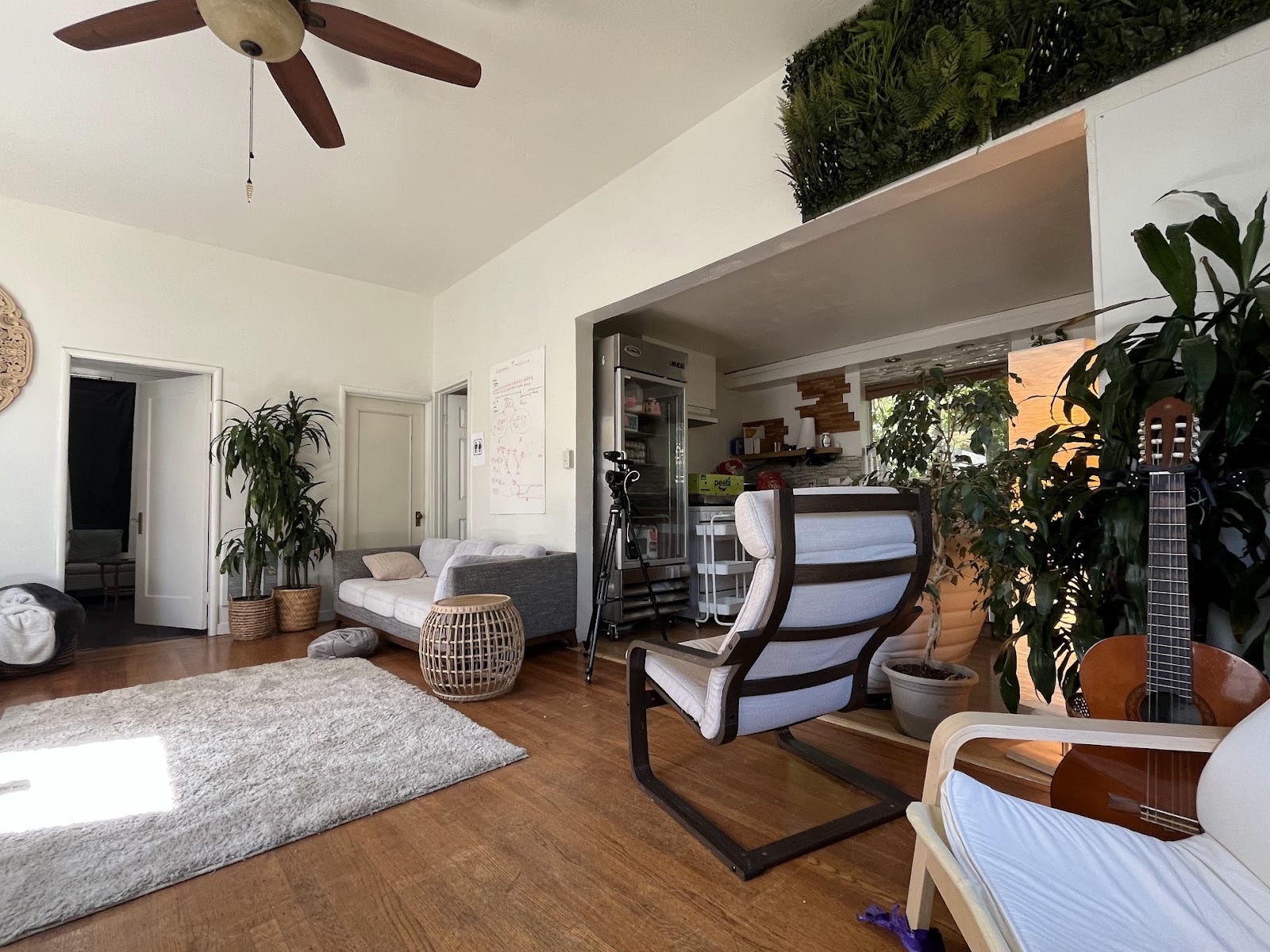
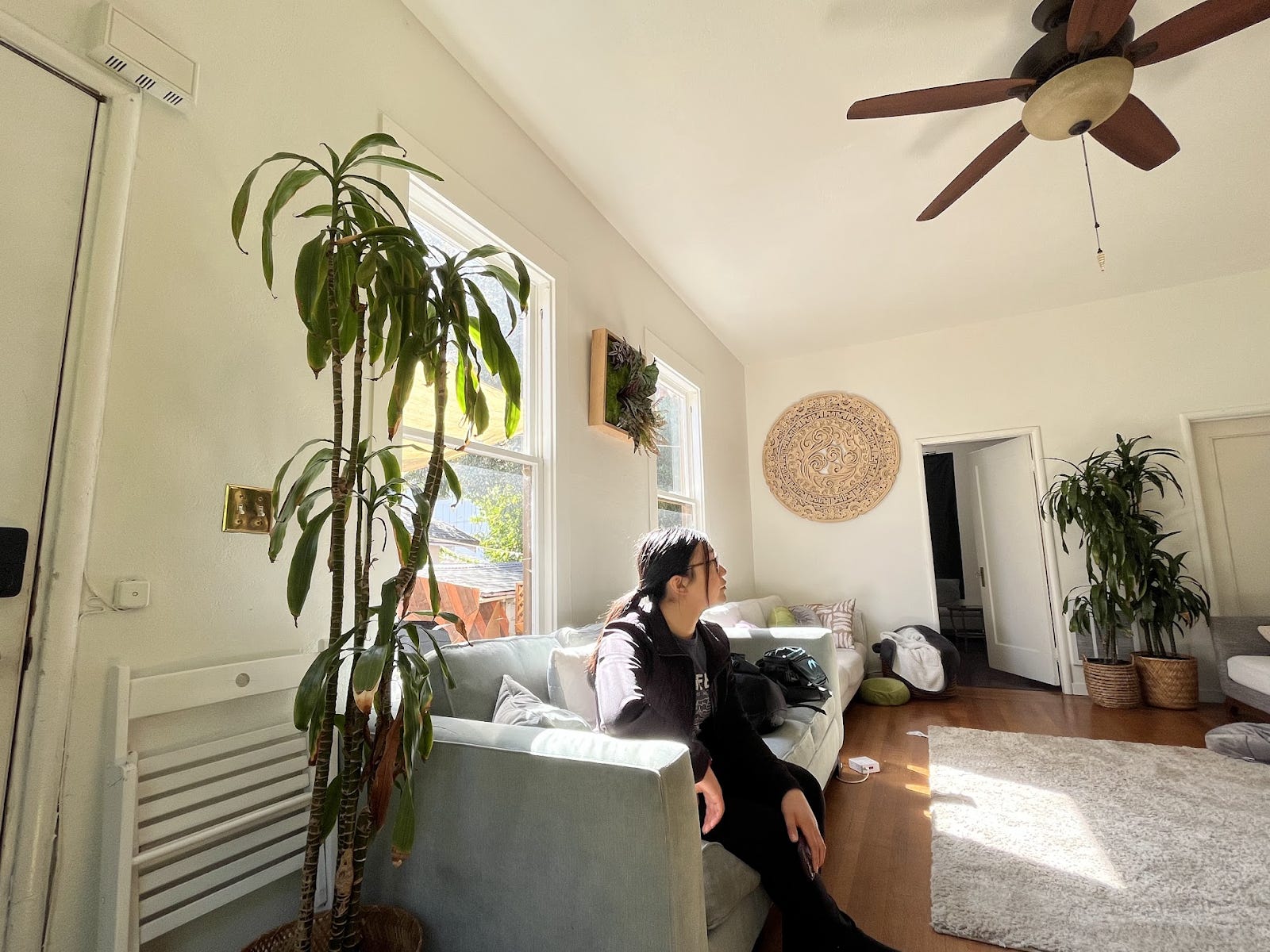
I expect the results of this to not only be a great public good, but excellent marketing for Manifest+LessOnline+ASC.
The main drawbacks with using Building F are that it’d block the bathroom inside while people are recording, it’d be difficult to access the attached kitchen for the same reason, and it wouldn’t be usable as a coworking/event space. I think that it’s still worth using regardless, especially considering that the Manifest and ASC organizers weren’t planning on using it.
If you’re excited about this, and willing to let me use Building F during your conference, let me know and I’ll start making this happen.
Yours,
Sammy
I briefly borrowed the speaker for an impromptu dance party. Festival Season was a lovely time.
lmao when Ben Pace read this he left a comment of “we need to talk about the chairs”
Also, sometimes Dropbox corrupts high-quality video files, so I think we ended up using GDrive as an alternative. Ugh.
Apparently setting up the cameras to record automatically to a desktop was a pain in the ass. Thank god it wasn’t my problem
also, seeing the dirt accumulate around the chairs as the conferences went on brought out my inner homicidal Asian mother.
Notably, the Manifest organizers were a little hesitant about having their attendees pulled away into a dark room for much of the conference. It took a lot of talking through restrictions to come up with something everyone was happy with, and the below Slack thread was briefly hilariously stressful, but seeing the actual studio itself was enough to put everyone’s worries at ease
